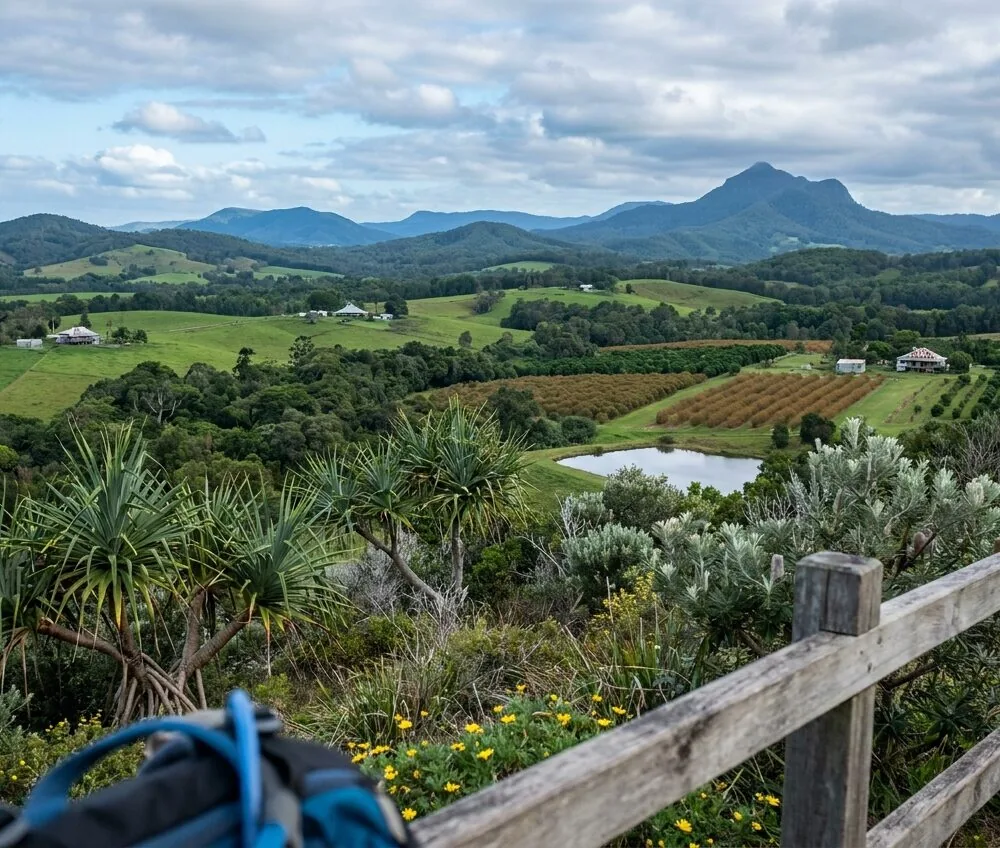
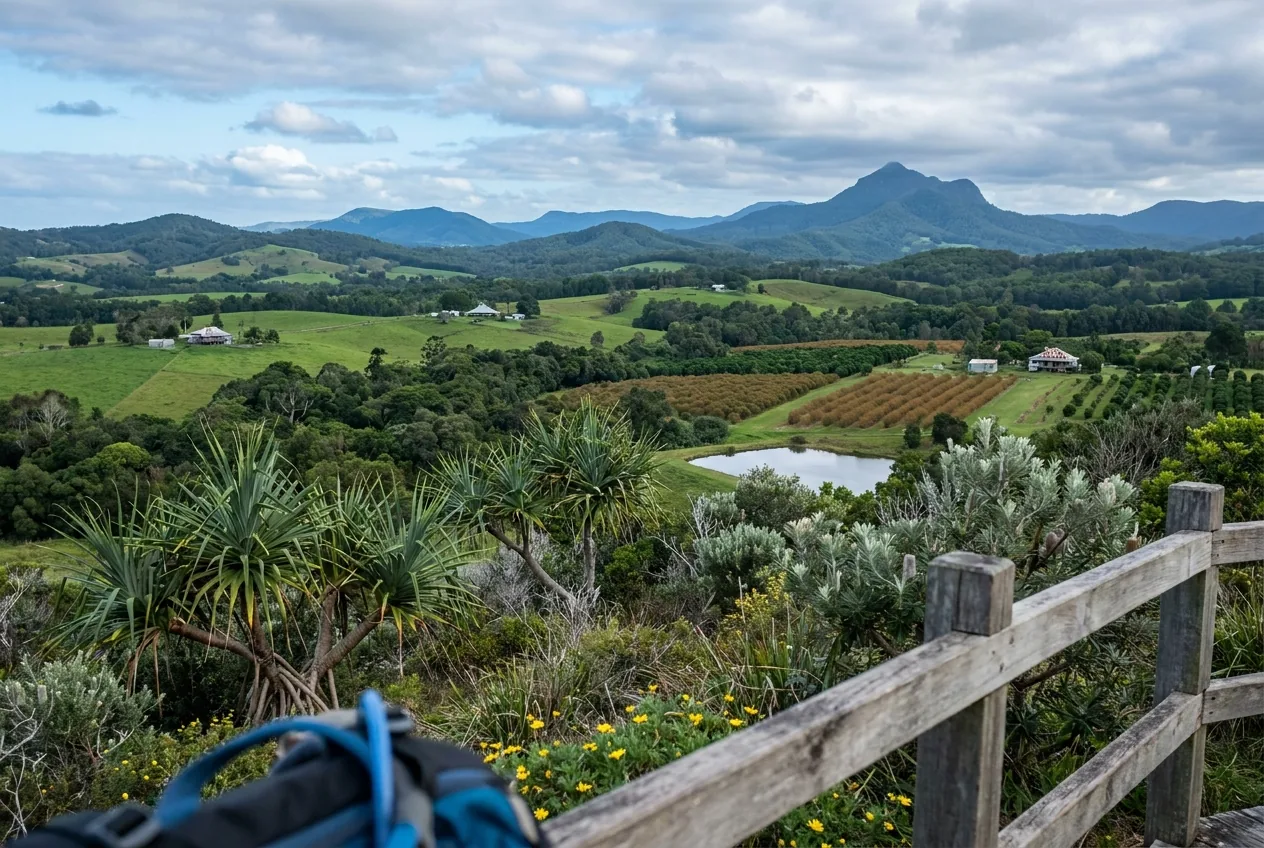
Forget the boho-hippie fantasy of sunrise yoga, crystals on the windowsill, and a vague aura of slow living. The Byron Bay that exists in 2026 is a different place. Byron is a millionaire’s playground with weekend accommodation that triples on Friday afternoon, a wellness industry larger than its permanent population, and a town centre that empties of locals during peak summer because the locals have been priced out. None of which makes it not worth visiting. It does mean a useful byron bay itinerary has to be honest about what Byron has become and tell you which experiences are worth the money. This is a research briefing on a 5–7 day Byron Bay trip, written from a desk in Casablanca, drawing on Destination NSW’s Byron Bay pages, the Bureau of Meteorology Byron Bay station, the Bluesfest official site, Cape Byron Marine Park guidance, and NSW National Parks data on Nightcap and Wollumbin. No partner links, no fabricated retreat names, no padding to hit a word count.
The questions a real visitor actually asks about a byron bay itinerary are simpler than most guides admit. Is Byron worth visiting. How many days. When to avoid. What does it cost. We answer those, in that order, with sources you can verify yourself.
The headline answer: a 5-day byron bay itinerary is the sweet spot, the hinterland is the actual differentiator, and Easter weekend plus November Schoolies are the windows to actively avoid. Five days, hinterland-heavy, with named day-trip pivots — Bangalow, Federal, Mullumbimby, Brunswick Heads, Nightcap National Park — is the version that works. The rest of this brief is the working-out.
Quick facts
- Duration: 5 days sweet spot, 7 days for slow travel
- Cost (per person, mid-range): AUD 1,800–4,500 excluding flights
- The actual highlight: Hinterland (Bangalow, Federal, Mullumbimby) + Cape Byron walk
- Avoid these dates: Easter (Bluesfest historically), November (Schoolies), Christmas–mid-Jan
- What to skip: Crystal Castle, $200 sound baths, main strip on weekends
What most Byron Bay guides get wrong
The first mistake in most byron bay itinerary articles is selling the boho-hippie-town fantasy. The Byron of 1985 — a sleepy surf town with a few yoga studios and a counter-culture spillover from Nimbin — has been gone for a decade. The Byron of 2026 is one of Australia’s most expensive coastal towns. Beachfront houses sell for AUD 8 to 25 million. Weekend mid-range accommodation runs AUD 380 to 700 a night. The “alternative lifestyle” branding is now a marketing layer over a Hamptons-of-the-South-Pacific reality. Honest guides should say so.
The second mistake is recommending Byron during Bluesfest. Bluesfest historically runs over the Easter long weekend at the Tyagarah Tea Tree Farm just north of Byron. Easter 2026 fell on April 3, and Bluesfest’s published 2026 dates were April 2 to 5. However, Bluesfest organisers cancelled the 2026 edition in early 2026 citing rising production, logistics, and insurance costs. Even without the festival, Easter weekend remains a peak-crowd window in Byron — accommodation prices spike, the town centre is full, and the hinterland is the only reasonable retreat. Check bluesfest.com.au for 2027+ dates and status before booking around the Easter window in future years.
The third mistake is treating the hinterland as a footnote. The volcanic-plateau country 15 to 40 minutes inland — Bangalow, Federal, Newrybar, Mullumbimby, the Nightcap National Park rim — is the editorial differentiator. Most visitors never leave the coast and miss the better half of the trip. A serious byron bay itinerary gives the hinterland two of its five days.
The fourth mistake is hiding accommodation prices. Peak-season weekend mid-range rates can hit AUD 700+ a night at properties that charge AUD 220 midweek in shoulder season. The price spread is the single biggest variable in any Byron trip cost. Listicles that quote a single figure for “Byron accommodation” are useless; the real range is AUD 170 to 900+ per night depending on day of week and season.
Is Byron Bay worth visiting?
The “is byron bay worth visiting” question is the right one to ask before booking the flight. The honest answer: yes, with caveats — and not in November or Easter. Byron is worth visiting for the Cape Byron lighthouse walk at sunrise, the hinterland villages and Nightcap National Park, two or three specific beaches (Wategos, Clarkes), and the food scene if you eat midweek and book ahead. It is not worth visiting if you cannot avoid the peak event windows, if you expect a quiet hippie town, or if you cannot rent a car for at least two days of the trip.
The real value of an honest byron bay itinerary is the hinterland pivot. Treat the town and beach as the first day or two of the trip, then drive inland and let the place actually slow down — Bangalow’s weekend market, Federal’s local-produce cafes, Mullumbimby’s Friday market, the rainforest walks at Minyon Falls. The hinterland is also where the photogenic Byron of marketing imagery actually exists.
A byron bay itinerary built only around the town centre and Main Beach is the version most visitors regret. The byron bay hinterland is the version they remember. Anyone asking “is byron bay worth visiting” with a Mullumbimby market on the calendar already has the answer.
How many days in Byron Bay?
The how many days in byron bay question is the most important planning decision and the answer depends on whether you have a car and which days of the week you can be there. It also depends on whether you intend to give the byron bay hinterland its proper share of the trip — most things to do in byron bay listicles assume zero hinterland time, which collapses the right answer to two days.
- 2 days: the lighthouse walk + Wategos Beach + a Bangalow drive. Rushed. Doable as a weekend stop on a longer NSW road trip. Skip if it is your only Byron experience.
- 3–4 days: above plus a hinterland day, a farm-to-table dinner, and a surf morning at Main Beach. The minimum honest length for a Byron Bay trip that justifies the airfare and accommodation cost.
- 5–7 days: above plus Tea Tree Lake, Mullumbimby, Brunswick Heads, Nightcap National Park rainforest walks, and time for the place to actually slow you down. Recommended length. 5 days is the sweet spot. Adds a Sunday-afternoon hinterland session that 4-day trips cut out.
- More than 7: diminishing returns unless you have a specific reason (surfing daily, attending a multi-day yoga retreat, wedding hosting, et cetera).
If you have to pick: 5 days, midweek arrivals on Tuesday or Wednesday, drive in via Ballina airport, drive out via Gold Coast airport so you do not back-track. Two of the five days dedicated to hinterland.
Best time to visit Byron Bay (and when to avoid)
Byron has a subtropical climate that stays swim-warm for roughly eight months of the year per BOM Byron Bay station data. The seasonal calendar matters less for weather than for crowds and pricing. The windows that matter, in order of importance:
Worst — actively avoid:
- Easter long weekend. Even with Bluesfest 2026 cancelled, Easter is peak crowd. Accommodation triples; the town runs at festival capacity Friday and Saturday.
- November 21 to December 12 — Schoolies. Three weeks of school-leaver celebrations. NSW schoolies hit Week 2, November 28 to December 5. Many businesses dial down service.
- Christmas Eve to mid-January. Peak summer. Prices peak. Beaches 5 to 10 times more crowded. Hinterland still works.
- NSW school holidays. April, July, late September. Each adds a 30-50% crowd lift.
Best — book aggressively:
- April 15 to May 31 (post-Easter, autumn). Water still 22 to 25°C. Bluebottles occasional on onshore-wind days. Crowds normalised. Accommodation pricing softens.
- September. Spring starts, whale migration still passing, ocean warming up, crowds thin. Excellent value.
- October. Warm, dry, no major events. Pre-Schoolies. Best month overall on price-quality balance.
- June to August (winter). Cooler (18 to 22°C daytime), ocean drops to 19°C. Hinterland is glorious. Whale watching from the lighthouse peaks. Prices lowest of the year.
The compressed answer: target October, secondary April-May, avoid November 21 to December 12 and Easter weekend at all costs.
What this 5–7 day Byron Bay itinerary actually costs
A 5-day byron bay itinerary costs AUD 1,800 to 4,500 per person mid-range, before international flights. The huge range is real and reflects the day-of-week premium. Cross-checked against Destination NSW Byron Bay regional cost data and current accommodation listings.
- Accommodation (5 nights, mid-range): AUD 200 to 450 per night = AUD 1,000 to 2,250 total. Friday and Saturday nights run 30 to 80 per cent above midweek rates. Five midweek nights can be AUD 1,000; five nights spanning two weekends can hit AUD 2,250.
- Food (mid-range, 5 days): AUD 80 to 120 per person per day = AUD 400 to 600 total. One nicer dinner adds AUD 60 to 100.
- Car hire (essential for hinterland — 3 to 5 days): AUD 60 to 100 per day for a compact = AUD 300 to 500. One-way drop-off Ballina-to-Gold-Coast adds AUD 100 to 200.
- Surf lesson (optional): group AUD 79 to 120, private AUD 180 to 250 per hour.
- Activities: Cape Byron lighthouse walk free, hinterland markets free, Tea Tree Lake free, Nightcap NP free, parking AUD 8 to 15 a day depending on town vs national park = AUD 50 to 150 across the week.
- Incidentals: AUD 50 to 200 (yoga drop-in, cafe premium, bottle of wine).
Itemised total: AUD 1,800 per person on midweek shoulder dates with shared accommodation; AUD 4,500 solo on weekend peak. Plan around the day-of-week premium and the cost compresses fast. A backpacker version (dorm, self-catered breakfasts, no surf lesson) lands closer to AUD 1,150 to 1,500.
The 5–7 day Byron Bay itinerary
This is the working version of the byron bay itinerary we recommend. Five days, hinterland-heavy. Days 6 and 7 if you have them are repeats of favorites at slower pace.
Day 1: Cape Byron lighthouse walk + Main Beach orientation
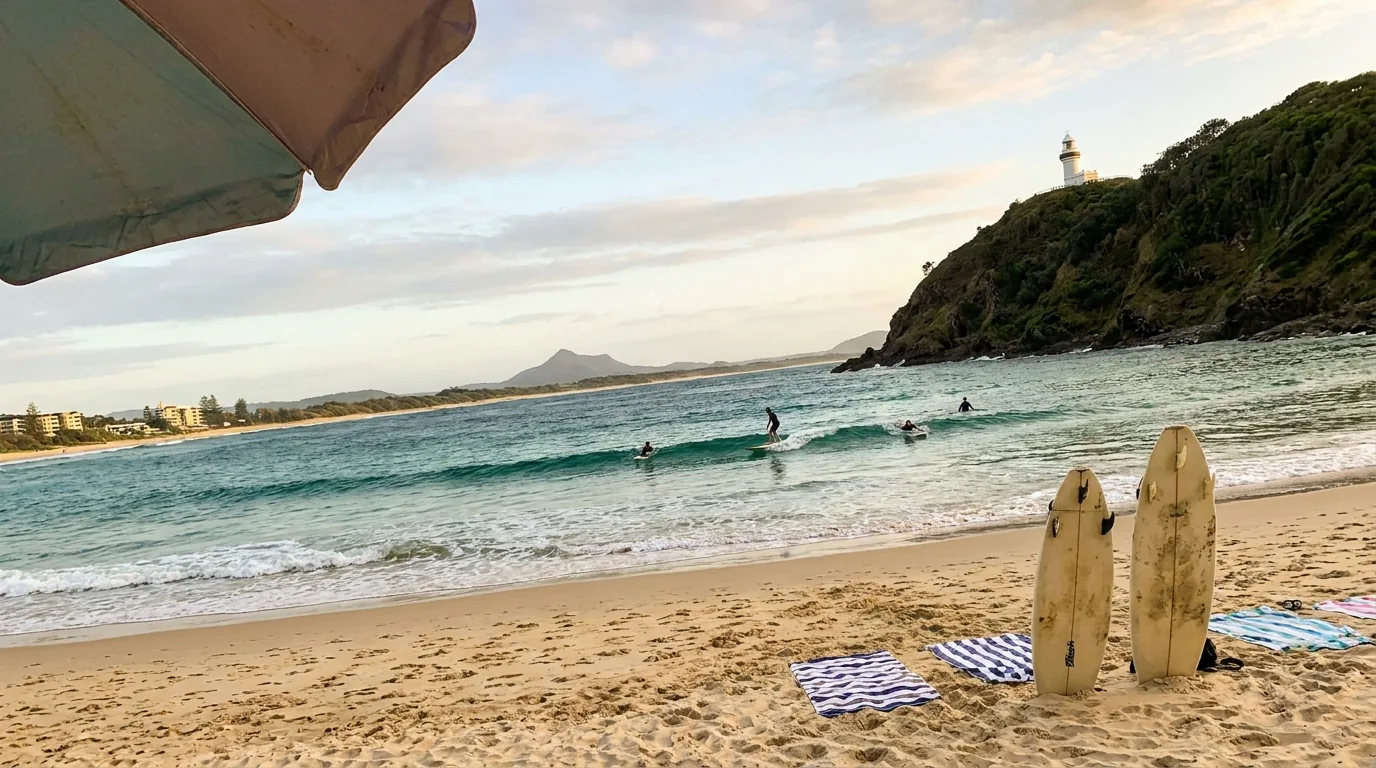
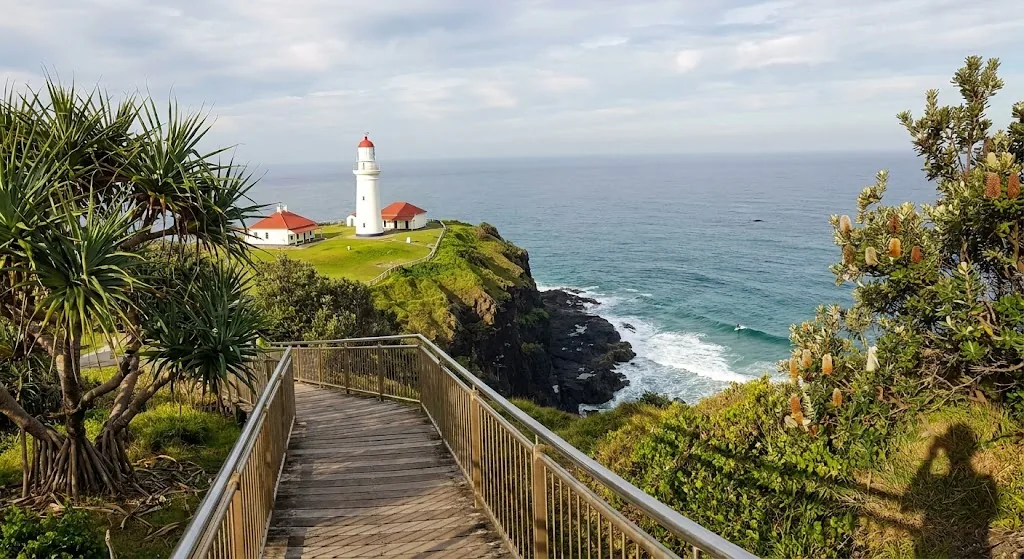
Cape Byron Walking Track is a 3.7-kilometre loop, 90 minutes at a steady pace, climbs from the Captain Cook Lookout car park to the lighthouse at the easternmost point of mainland Australia. Go at sunrise. Pod dolphins are resident in the marine park year-round and you will often see them from the headland. Humpback whales pass during the migration windows (June to August northbound, September to November southbound). The lighthouse-keepers’ cottages are a small free museum at the top.
After the walk: Main Beach for the first swim — shore break is gentle, lifeguards patrol, suitable for kids. Lunch in town. Wategos Beach for the late afternoon — calmer water, sheltered cove, the photograph everyone takes. Dinner in town; book ahead for the popular spots even on a Tuesday.
Day 2: Hinterland — Bangalow + Federal
Day 2 is the byron bay hinterland day, and the editorial pivot the rest of the itinerary turns on. Pick up the rental car. Drive 12 minutes inland to Bangalow village. Weatherboard buildings on Byron Street, a Saturday market on the fourth Sunday of every month, cafes that run with local-produce menus. Coffee at one of the three cafes near the post office.
Drive 15 minutes further to Federal — a one-pub village with a Japanese-Australian breakfast institution that has been running since the early 2000s. Order whatever the day’s specials are.
Afternoon: Newrybar (10 min from Federal) for antique stores and homewares; or drive the loop via Nashua and Booyong for pure scenic driving. Skip Crystal Castle (see “What to skip” — overpriced gift shop with botanical-garden pretensions). Back to Byron for dinner.
Day 3: Surf morning + Tea Tree Lake
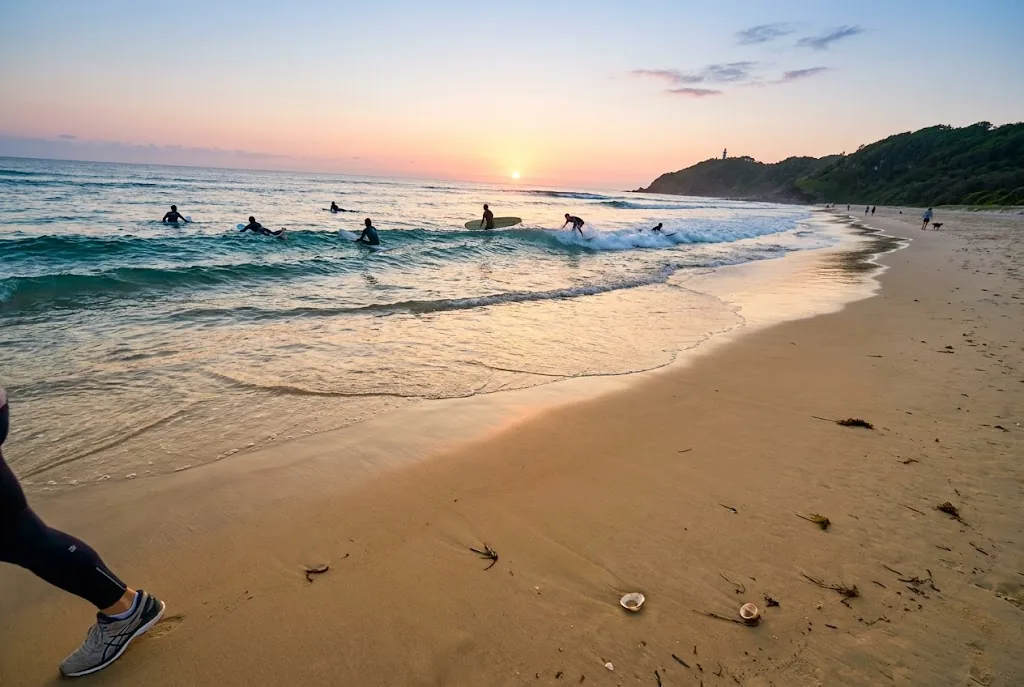
Optional group surf lesson at Belongil Beach or Main Beach. Beginner lessons run AUD 79 to 120, board and wetsuit included. Two hours, then lunch in town.
Afternoon at Tea Tree Lake (15 minutes drive south of Byron, free entry). Orange-tinted water from the surrounding tea-tree forest, calm and shallow, photogenic. Swim, dry off, drive back via the coast road through Suffolk Park.
Day 4: Mullumbimby + Brunswick Heads
Drive 30 minutes north-west to Mullumbimby for the Friday market (if your trip is on a Friday) or just for the village itself — old timber buildings, a small main street, the most genuinely-counter-culture town in the region. Lunch.
Continue 15 minutes to Brunswick Heads — river-mouth town, less commercial than Byron, pub lunch by the water if you skipped lunch in Mullumbimby. The Brunswick Heads bridge is the photo most people take. Drive back to Byron via the coast road.
Day 5: Hinterland day 2 — Nightcap National Park
40 minutes inland to Nightcap National Park. Minyon Falls walk is the headline — pram-accessible upper lookout, optional steep two-hour return down to the swimming hole at the base for confident hikers. Pure rainforest. Pack lunch from a Bangalow bakery on the way; there are no shops in the park.
Other Nightcap walks: Protesters Falls (closed during seasonal frog breeding — check current status before driving), Pholis Gap. Plan four hours minimum at Nightcap.
Drive back via Mullumbimby for an early dinner if you skipped Day 4.
Optional Days 6–7
Repeat the lighthouse walk at sunrise. Lazy mornings. A second hinterland day in places you missed — Nashua, Booyong, or Mount Warning’s lookouts (the summit climb is closed to non-Indigenous climbers under a Bundjalung agreement; check Wollumbin park status). Don’t over-program. The slow-down is the point.
Where to actually swim in Byron Bay
Swimming is one of the top things to do in byron bay for most visitors and the most-asked question after how many days in byron bay you should book. Byron’s beaches are not interchangeable. Where you swim depends on swim ability and which day of the trip.
- Wategos Beach. Sheltered cove on the east side of the headland, calm water, family-friendly, the safest swim beach in town. Best for first-time-in-Byron mornings.
- Clarkes Beach. The next beach east of Main Beach, gentler waves than Main, less crowded. Underrated swim option.
- Main Beach. Flagged swim beach with surf lifeguards. Watch the flags; currents are real, especially after storm swell. Surf is gentle enough for beginner lessons.
- The Pass. Famous longboard surf break. Not a swim beach. Sit on the grassy headland above it at 7am with a takeaway coffee and watch the surf.
- Tallow Beach. South side of the headland. Seven kilometres of unpatrolled sand. Currents stronger than Main Beach; swim only if you read surf well, otherwise walk it for the cliff scenery.
- Tea Tree Lake. Freshwater alternative inland. Calm, shallow, tea-tinted. Best on a hot afternoon when the ocean is choppy.
Bluebottles wash up on onshore-wind days year-round. If purple flags are flying at Main Beach, do not enter the water — stings hurt and the beach is already advising avoidance.
The wellness scene: real vs overpriced
Byron’s yoga and wellness industry employs more practitioners than the town has permanent residents. Some of it is excellent. A meaningful portion is tourism pricing dressed as spiritual practice. The honest split:
Real value:
- Drop-in yoga at one of the four reputable studios near the town centre: AUD 25 to 40 per session. Sample widely; the better studios list teachers’ names and lineages publicly.
- Sunrise yoga on Main Beach (often free or donation-based). Low commitment, real local atmosphere.
- A walk in Nightcap National Park (free). Better for the nervous system than most paid sessions.
- A meditation session with a credentialed teacher. Rates run AUD 30 to 60 for an hour drop-in. Look for proper credentials and a clear teaching lineage.
Overpriced:
- AUD 200+ sound bath sessions. Atmosphere mostly; therapeutic claims are weak.
- Crystal shops on the main strip selling AUD 50+ stones you can buy on Etsy or eBay for AUD 5 to 15.
- “Healing retreats” charging AUD 3,000 to 5,000+ per week with no medical or therapeutic credentials. Due-diligence-fail rate is high. Credentialed retreat operators list their teachers by name, training lineage, and specific techniques. Avoid retreats that lead with emotional-outcome promises and vague language.
If wellness is the trip driver, Federal or Mullumbimby in the byron bay hinterland often offer better value than the town centre at the same quality.
Where to stay in Byron Bay
Pick the zone first; star rating second.
- Byron CBD (Jonson / Marvell Streets). Walk to everything. Loud on weekend nights — two pubs run live music until 1am. Mid-range AUD 300 to 500 a night, weekend premium 30 to 80 per cent above midweek.
- Suffolk Park (5 minutes south). Quieter, residential, beach access via Tallow. AUD 200 to 350 a night. Good for couples, families, light sleepers.
- Belongil (north end). Surfer-friendly, slightly removed from town, beachfront. AUD 250 to 400 a night.
- Bangalow (12 min inland). Quieter, 20-30% cheaper, hinterland atmosphere, car required. AUD 180-300 a night. Best for visitors who want the hinterland-heavy itinerary as their default mood.
Avoid Friday-Sunday rates if budget matters. Midweek arrivals and departures can drop the per-night rate by AUD 80-200 at the same property. The Byron destination archive: saltrove.com/destinations/byron-bay.
What to skip in Byron Bay
The honest closer for a 5-day byron bay itinerary. These are the recurring time-and-money traps in the things to do in byron bay listicle ecosystem.
- Skip Crystal Castle. AUD 30+ entry for a botanical garden with a gift shop; the actual experience is mostly retail floor.
- Skip main-strip restaurants on Friday and Saturday nights. Slow service, premium pricing, queues. Eat in Suffolk Park, Bangalow, or Brunswick Heads instead, or eat midweek.
- Skip “wellness retreats” without credentialed practitioners. AUD 3,000 to 5,000 per week is real money. Verify teachers’ credentials, training lineages, and specific techniques before booking.
- Skip visiting during Easter weekend or November 21 to December 12 Schoolies. Even with Bluesfest 2026 cancelled, Easter is peak crowd; Schoolies is its own three-week window of school-leaver chaos.
- Skip Byron in heavy rain. The hinterland walks become unsafe; the beach becomes choppy. Most cafes close early. Wait for the next day or move on.
Plan the next leg
A byron bay itinerary is most often part of a longer east-coast Australia trip. The full visa-flights-routing planning frame is in our how to plan a trip to Australia brief. The natural pairing south is the Sydney to Byron Bay road trip — the seven-day NSW north-coast drive ends here. Linking back to Sydney, our Sydney 2-day itinerary is the harbour-focused weekend that bookends the trip. North across the state border, Gold Coast things to do covers the 75-minute drive up; further still, the Cairns to Brisbane Queensland road trip is the next east-coast leg. For the official picture, Destination NSW’s Byron Bay page and Cape Byron Marine Park guidance are the government-authority sources we cross-reference. The Saltrove newsletter catches the next regional brief.
M. Saltrove is the editor of Saltrove. Based in Casablanca, Morocco, M. researches Australian travel from primary sources — government data, weather records, traveler reports — and writes from a desk, not a campervan. Each article notes whether it is a field report or a research briefing. This piece is a research briefing.
Frequently asked questions
Is Byron Bay worth visiting?
Yes, with caveats — and not in November or Easter. Byron is worth visiting for the Cape Byron lighthouse walk at sunrise, the hinterland villages (Bangalow, Federal, Mullumbimby) and Nightcap National Park, two or three specific beaches (Wategos, Clarkes), and the food scene if you eat midweek and book ahead. It is not worth visiting if you cannot avoid the peak event windows (Easter, November Schoolies, Christmas-mid-Jan), if you expect a quiet hippie town (the boho-era Byron is gone), or if you cannot rent a car for at least two days. The hinterland is the actual differentiator — visitors who skip it usually regret the trip.
How many days do you need in Byron Bay?
5 days is the sweet spot. 2 days covers the lighthouse + Wategos + a Bangalow drive but feels rushed. 3-4 days adds a hinterland day, a surf morning, and a farm-to-table dinner — the minimum honest length for a Byron trip that justifies the airfare. 5-7 days adds Tea Tree Lake, Mullumbimby, Brunswick Heads, Nightcap National Park rainforest walks, and time for the place to actually slow you down. More than 7 days hits diminishing returns unless you have a specific reason (daily surfing, multi-day yoga retreat, et cetera). Best structure: 5 days, midweek arrivals, two days dedicated to hinterland.
When should you avoid Byron Bay?
Easter long weekend, November 21 to December 12 (Schoolies), Christmas Eve to mid-January, and NSW school holidays. Easter weekend remains a peak crowd window even with Bluesfest 2026 cancelled (organizers cited rising production costs); accommodation triples and the town runs at festival-day capacity. Schoolies week 2 (November 28 to December 5, 2026) is when the largest NSW school-leaver cohort hits Byron — the town becomes a 17-year-old party town for that fortnight. Best months: October (warm, dry, no major events — best overall for price-quality balance), April-May post-Easter, and September for shoulder-season prices.
Is Byron Bay expensive?
Yes, especially on weekends. A 5-day mid-range Byron Bay trip costs AUD 1,800 to 4,500 per person before international flights — the huge range reflects the day-of-week premium. Friday and Saturday accommodation runs 30-80 per cent above midweek rates; properties charging AUD 220 midweek can hit AUD 700+ on weekends. Mid-range 5 nights: AUD 1,000-2,250 accommodation, AUD 400-600 food, AUD 300-500 car hire (essential for hinterland), AUD 50-200 incidentals. A backpacker version (hostel dorm, self-catered breakfasts) lands closer to AUD 1,150-1,500. The cheapest single move: arrive Tuesday or Wednesday, depart before Friday.
Is Byron Bay overrated?
Half-yes, half-no. The boho-hippie marketing pitch is overrated — the Byron of 1985 has been gone for a decade. The current town is one of Australia's most expensive coastal destinations with beachfront houses selling for AUD 8 to 25 million and a wellness industry larger than its permanent population. The Cape Byron lighthouse walk, the hinterland villages, and a few specific beaches genuinely earn their reputation. The yoga and wellness sector is a mixed bag — drop-in classes at credentialed studios (AUD 25-40) are real value; AUD 200 sound baths and uncredentialed AUD 3,000-5,000 retreats are not.
Can you swim at Byron Bay's beaches?
Yes, but pick the right beach. Wategos Beach (sheltered cove on the east side of the headland) is the safest — calm water, family-friendly, the photograph everyone takes. Clarkes Beach (next to Main Beach) has gentler waves and less crowds. Main Beach is flagged and lifeguard-patrolled but currents are real after storm swell. Tallow Beach south of the headland is unpatrolled with stronger currents — walk it for cliff scenery, do not swim unless you read surf well. The Pass is a longboard surf break, not a swim beach. Tea Tree Lake (15 minutes inland, free) is a freshwater alternative for hot afternoons when the ocean is choppy. Bluebottles wash up on onshore-wind days; if purple flags are flying, do not enter the water.
Do you need a car in Byron Bay?
Yes for at least two days of the trip. The hinterland — Bangalow, Federal, Newrybar, Mullumbimby, Brunswick Heads, Nightcap National Park — is the editorial differentiator and only properly accessible by car. Within Byron itself the town centre, Main Beach, the lighthouse walk, and most restaurants are walkable in 15-20 minutes from a central hotel; you can do Days 1 and 3 of a 5-day itinerary without a car. Hire car for Days 2, 4, and 5 (the hinterland days). Compact car hire AUD 60-100 per day for 3-5 days = AUD 300-500. One-way drop-off Ballina-to-Gold-Coast adds AUD 100-200 but lets you skip the Sydney back-track on departure.
What's worth doing in the Byron hinterland?
Bangalow village (12 minutes inland — weatherboard buildings, fourth-Sunday-of-the-month market, local-produce cafes) is the easiest first hinterland stop. Federal (15 minutes further) has a Japanese-Australian breakfast institution and a one-pub atmosphere. Mullumbimby is the most genuinely-counter-culture town in the region — Friday market, old timber buildings. Brunswick Heads is a river-mouth town less commercial than Byron. Nightcap National Park (40 minutes inland) has Minyon Falls walk (pram-accessible upper lookout, optional steep two-hour return for the swimming hole) — pure rainforest and the highlight of any Byron trip. Skip Crystal Castle (overpriced gift shop with botanical-garden pretensions, AUD 30+ entry).