A Victoria travel guide that leads with a thousand words on Melbourne has missed the state. Saltrove already has a dedicated Melbourne coffee crawl article for the laneway scene, and Melbourne is one of five regions in this state — not the destination. Victoria’s value is the Great Ocean Road as a 3-day drive, the Yarra Valley vs Mornington Peninsula wine decision, the Grampians vs Wilsons Promontory hiking matrix, the cool-climate alpine High Country that most guides ignore, and Phillip Island’s Penguin Parade as an honest line-item with verified tier pricing. We are not running the Melbourne-listicle play. This is a research briefing on Victoria beyond Melbourne, written from a desk in Casablanca, drawing on Tourism Victoria, Parks Victoria, the Bureau of Meteorology Melbourne and Lorne stations, the Phillip Island Nature Parks Penguin Parade booking pages, and verified Yarra Valley plus Mornington Peninsula cellar-door rates. No partner links, no fabricated wine-tour anecdotes.
The questions a real visitor actually asks of any victoria travel guide are simpler than most guides admit. Is Victoria worth visiting. How many days. What to do in Victoria besides Melbourne. Yarra Valley or Mornington Peninsula. We answer those, in that order, with sources you can verify yourself.
The headline answer: this victoria travel guide treats Melbourne as the gateway, the Great Ocean Road as a 3-day drive (not a day trip), the Yarra-vs-Mornington decision as a coast-or-cellars call, and the Grampians plus Wilsons Prom as the two hiking pivots that complete a 10-to-14-day itinerary. The rest of this brief is the working-out.
What most Victoria travel guides get wrong
The standard listicle of places to visit in victoria stacks four mistakes that send first-time visitors to the wrong half of the trip.
Spending the first thousand words on Melbourne. Melbourne deserves coverage, but a state-level victoria travel guide that becomes a Melbourne city itinerary is a category mistake. Saltrove publishes the Melbourne coffee crawl for the city-level read; this brief is for the regions and the victoria australia road trip route between them.
Recommending the Great Ocean Road as a day trip. It is 243 kilometres of coastal road one-way. A day tour from Melbourne is 13 hours of car time plus tour-bus stops at the Twelve Apostles. A great ocean road 3 day itinerary is the right minimum.
Treating the Grampians as an afterthought. The Grampians National Park has Australia’s best Indigenous rock-art sites at Brambuk plus dramatic sandstone-escarpment hiking. They are not a B-tier add-on to Wilsons Prom. The two parks deliver different experiences and the choice between them is a real one.
Ignoring the High Country. Bright, Beechworth, Mt Buller, Falls Creek, and Mt Hotham anchor a year-round region — autumn foliage in May–June, ski season June to early September, summer hiking and mountain biking the rest of the year. Most state guides skip it entirely.
Is Victoria worth visiting?
Yes — but plan for the regions, not the city. A victoria travel guide that lands you in Melbourne for seven days and never crosses the West Gate Bridge is not actually a Victoria trip; it is a Melbourne weekend extended past its useful length. The serious places to visit in victoria are the Great Ocean Road’s limestone coastline, the cool-climate Pinot Noir of Yarra and Mornington, the Grampians’ Indigenous heritage and sandstone walks, the alpine villages of the High Country, and the wildlife of Wilsons Promontory and Phillip Island. Melbourne is the international gateway, the laneway-coffee anchor (covered separately), and the basecamp for short regional drives — three to four days at most before the trip should leave the city for the actual victoria australia road trip programme.
How many days in Victoria?
Quick facts
- Duration: 7 days minimum, 10 days ideal, 14 days for depth
- Great Ocean Road: 3 days minimum (Lorne + Port Campbell overnights)
- Wine decision: Yarra Valley (sweeping estates) or Mornington (boutique + coast)
- Hiking decision: Wilsons Prom (coast + wildlife) or Grampians (rugged + Indigenous heritage)
- Don’t waste: GOR as day trip, Brighton Bathing Boxes if not photographing
Seven days minimum, ten days ideal, fourteen days for depth across all major places to visit in victoria. The most-asked planning question in any victoria travel guide.
- 7 days: Melbourne 1 + Great Ocean Road 3 + Yarra Valley 1 + Phillip Island 1 + Mornington Peninsula 1.
- 10 days: above plus Grampians 2 (or Wilsons Prom 2).
- 14 days: above plus High Country 3 (alpine plus Bright and Beechworth villages — the right depth for a full victoria australia road trip).
Seven days is genuinely the floor. Five days reduces to a Melbourne-plus-day-trip itinerary that does not show the regional places to visit in victoria this brief is built around.
The Melbourne Gateway
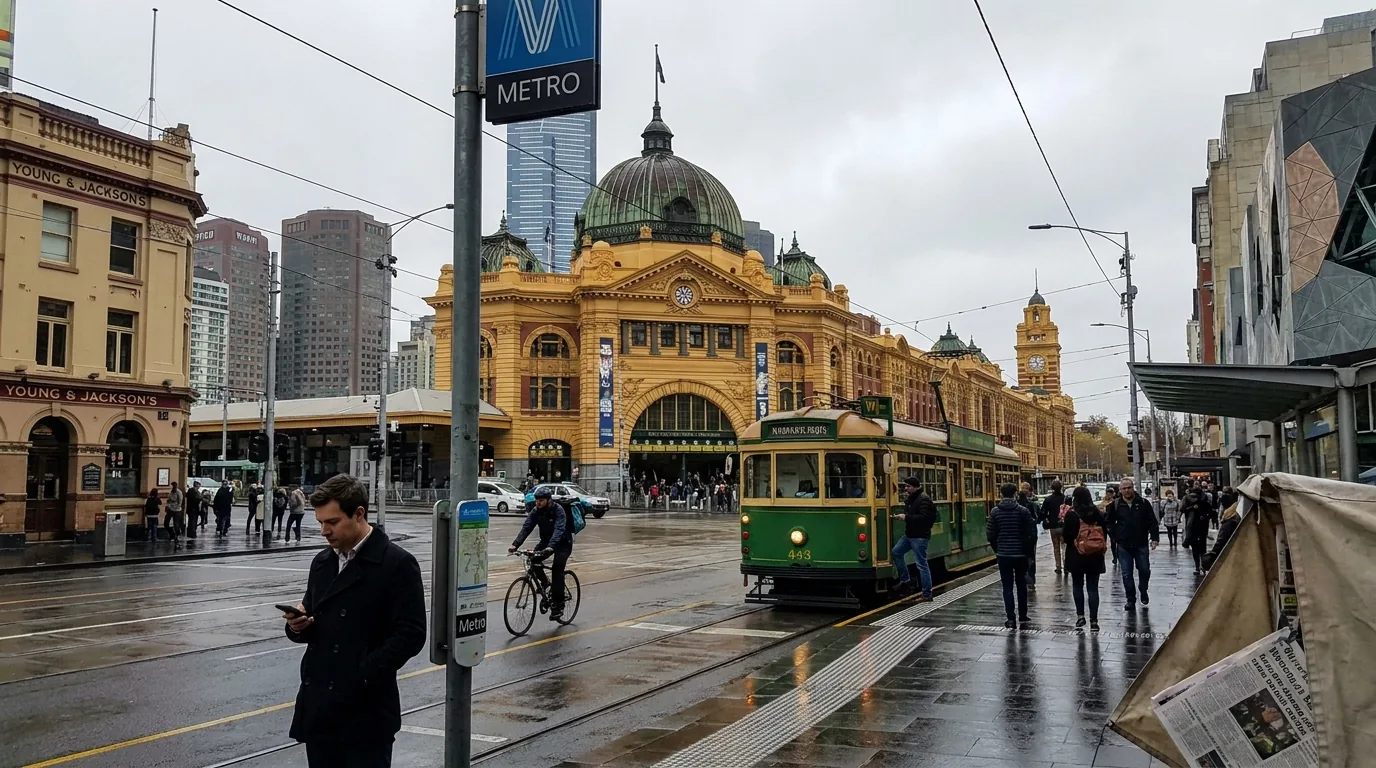
Melbourne is the arrival point, not the destination. The first thing this victoria travel guide treats it as is the airport on the way to the regional drives that follow — the entry hub for any victoria australia road trip out toward the Great Ocean Road, the Yarra Valley, the Grampians, or Phillip Island.
Melbourne Tullamarine (MEL) is the primary international and domestic airport, 25 kilometres northwest of the CBD. SkyBus runs every 10 minutes to Southern Cross Station — AUD 23 one-way, AUD 37 return, 30 to 45 minutes door to door, the most reliable transfer. Rideshare AUD 55 to 75. Avalon Airport (AVV) on the west side is a 65-minute SkyBus from the city and serves a handful of budget carriers. Inside the CBD, myki covers tram, train, and bus on a single card; the Free Tram Zone in the inner CBD requires no tap and is genuinely free — learn the boundary, posted at every stop. Day pass for the rest of the network AUD 10.60.
What the Melbourne Gateway should cover in a Victoria-state itinerary: one to two cultural-orientation days at most. The NGV International on Southbank, the Queen Victoria Market on a Saturday morning for the heritage building tour and the produce halls, a single afternoon walking the Yarra River path and the Federation Square precinct, dinner in Fitzroy or Carlton, and the State Library Victoria reading room if architecture is the brief. Two days, three at the outside. Beyond that, the city stops adding marginal value to a state-level trip and the regional drives start losing days they need.
The rental-car pickup decision matters here. Most cars are picked up at Tullamarine on arrival or at the Southern Cross Station depot in the CBD; the airport pickup saves a day-zero transit but adds an inner-city driving experience nobody enjoys. The Southern Cross pickup on the morning of departure for the regional leg is the cleaner play.
For Melbourne’s coffee scene specifically — laneway cafes, Fitzroy roasters, and the named-cafe walking sequence — see our Melbourne coffee crawl article. That is the dedicated city-level laneway read, not this brief, which leaves the city behind after section three.
The Great Ocean Road: 3 days, not 1
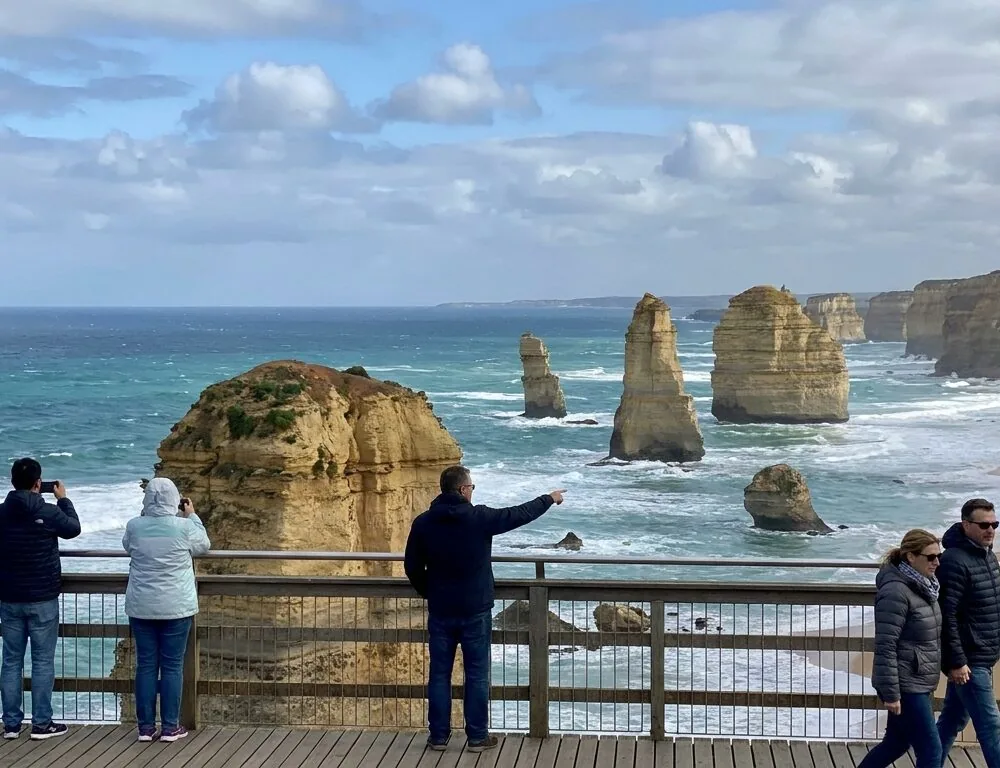
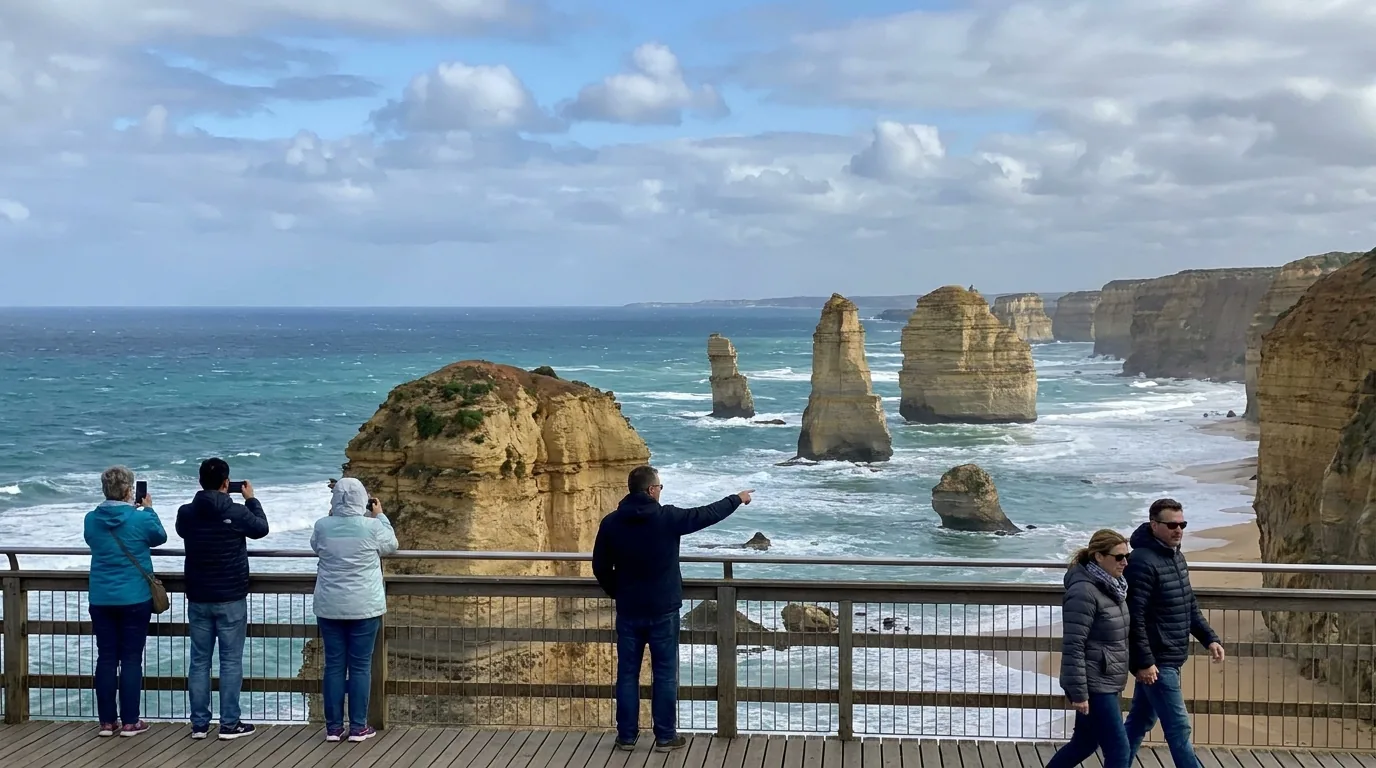
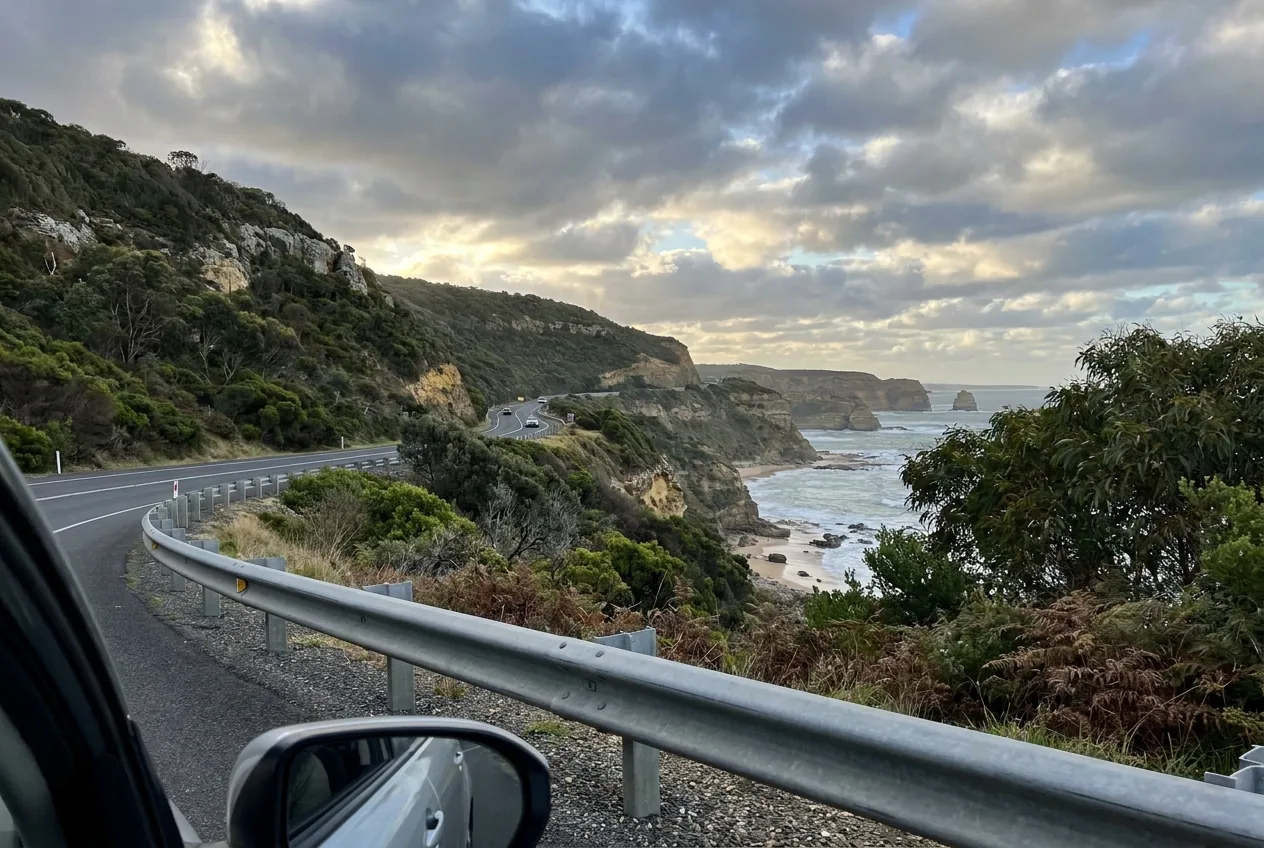
The single most-mishandled section of any victoria travel guide and the centerpiece of any honest victoria australia road trip. The Great Ocean Road is 243 kilometres of coastal road from Torquay to Allansford, hugging the limestone cliffs past the Twelve Apostles sandstone stacks. It is one of the world’s great coastal drives. Doing it as a day trip from Melbourne is 13 hours of car time, queueing with tour-bus crowds at the Apostles, and not seeing it properly. The right great ocean road 3 day itinerary uses two overnight stops:
Day 1: Melbourne → Lorne. 1.5 hours direct, 2.5 hours scenic via Geelong and Torquay. Stops: Bells Beach (the first photographable swell on the route), the Aireys Inlet lighthouse, Erskine Falls. Overnight Lorne — accommodation AUD 220 to 420 per night for mid-range pub rooms or boutique guesthouses on the seafront.
Day 2: Lorne → Apollo Bay → Cape Otway → Port Campbell. The headline driving day. Otway rainforest walks at Maits Rest, the Cape Otway lighthouse and koala-viewing road, Apollo Bay for lunch, then on to Port Campbell. Stop at the Twelve Apostles at sunset (after the day-trippers have left for Melbourne — the hour after 5pm is the quiet window). Overnight Port Campbell — AUD 200 to 380.
Day 3: Port Campbell coastal drive → Melbourne. The far-western stretch most day tours never reach and the section that proves the great ocean road 3 day itinerary is the right format. London Bridge (now a stack since the natural arch collapsed in 1990), Loch Ard Gorge, Bay of Islands, Bay of Martyrs. Sunrise at the Apostles for the photograph the day-trippers cannot get. Drive back to Melbourne via the inland route through Colac (3 hours direct, 4 with stops).
Self-drive only. There is no public transport that works for this; the bus tours that exist are the day trips the great ocean road 3 day itinerary is built to avoid.
Yarra Valley vs Mornington Peninsula: which wine region?
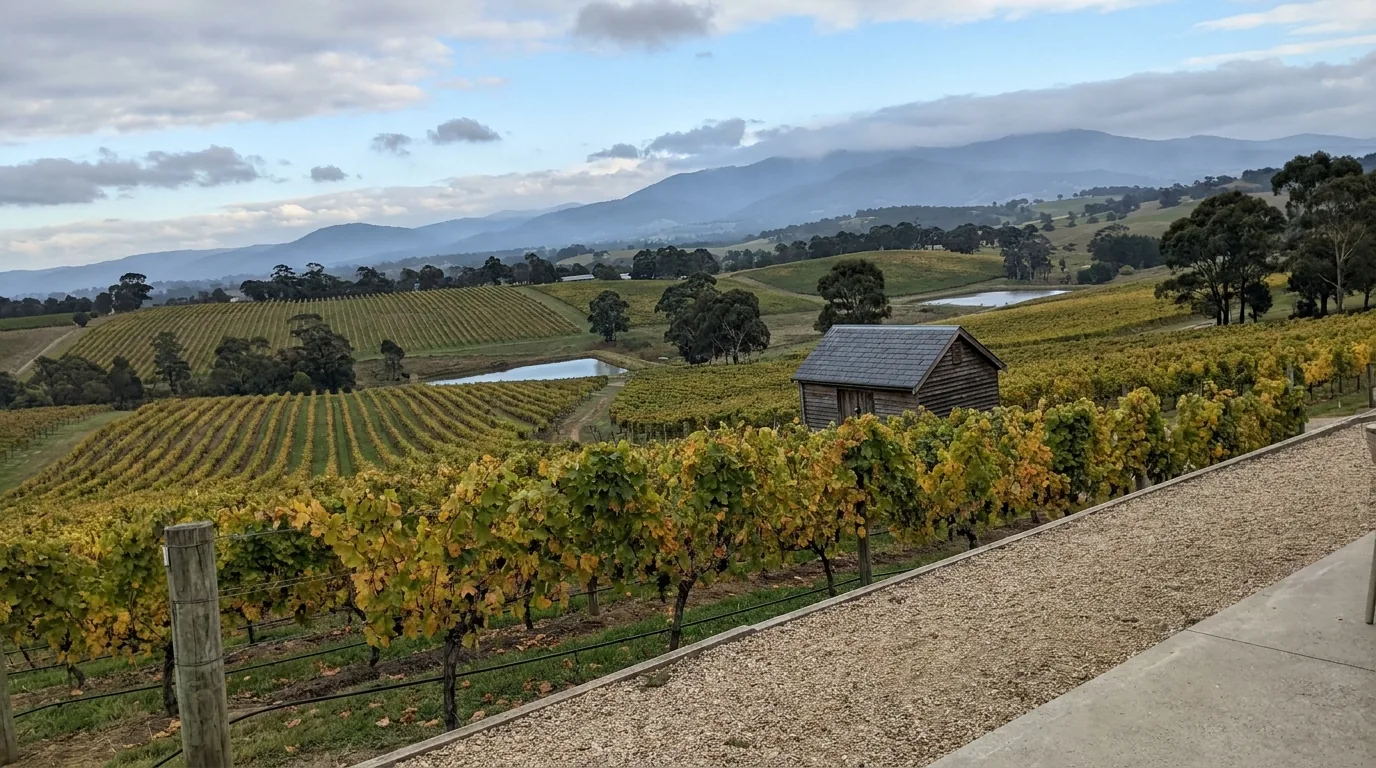
The yarra valley vs mornington peninsula decision is the most-asked wine question in any victoria travel guide. Both produce cool-climate Pinot Noir and Chardonnay; both are 60 to 90 minutes from Melbourne; both can be done as a designated-driver day trip or a one-night overnight. The trip experience is genuinely different.
Yarra Valley. 60 kilometres east of Melbourne, 1 hour by car. Sweeping estates, larger cellar doors, established names — Domaine Chandon, De Bortoli, Rochford, Yering Station, Innocent Bystander, TarraWarra. Wines: cool-climate Chardonnay, Pinot Noir, sparkling. Cellar-door tasting fees AUD 15 to 30 per person, often waived with a bottle purchase. A designated-driver bus tour from Melbourne runs AUD 130 to 180 per person and covers four to five cellar doors plus lunch. Best for: a structured wine-tasting day, larger groups, anyone whose primary purpose is the wine itself.
Mornington Peninsula. 1 hour southeast of Melbourne, wrapping around the eastern side of Port Phillip Bay. Boutique, smaller wineries, coastal views, hot springs. Wines: maritime Pinot Noir (the peninsula’s cooler-than-Yarra coastal climate produces a noticeably different style), Pinot Gris, Chardonnay. Cellar-door fees AUD 10 to 25. Named lunches: Polperro, Ten Minutes by Tractor, Pt. Leo Estate (with a sculpture park). Best for: couples wanting wine plus beach plus Peninsula Hot Springs in a single weekend, or anyone who wants the wine experience as part of a slower coastal pace.
Direct recommendation on the yarra valley vs mornington peninsula split: Yarra for the focused wine day, Mornington for the wine-plus-beach-plus-springs combo weekend. If forced to pick one for a first-time Victoria visitor, Mornington Peninsula edges Yarra — the peninsula’s geography (bay on one side, ocean on the other, Hot Springs in the middle) gives a single-day visit more shape than Yarra’s pure-cellar-door circuit.
Grampians vs Wilsons Promontory: which national park?
The second decision matrix. Both parks are 3 hours from Melbourne in different directions; both anchor a 2-to-3-day add-on. The trip experience is genuinely different.
Wilsons Promontory. 3 hours southeast of Melbourne, the southernmost tip of mainland Australia. Coastal, wildlife-heavy (kangaroos, wombats, and emus visible at the Tidal River campground), with hiking trails to empty granite-and-sand beaches. Best walks: Tidal River loop (3 km easy), Mount Oberon return (6.8 km, 2.5 hours, panoramic summit), Squeaky Beach (the sand actually squeaks underfoot at the right moisture level). Hard to book in summer; Tidal River campsites and cabins are 6 to 8 months ahead in peak. Best for: short-to-medium hikes plus beach time plus wildlife.
Grampians National Park. 3 hours west of Melbourne, sandstone escarpments and inland rugged scenery. Indigenous rock-art sites at the Brambuk Cultural Centre and across the park (the Grampians hold one of the densest concentrations of rock art in southern Australia). Easier to find accommodation — the village of Halls Gap inside the park has plenty of motels, B&Bs, and self-catering at AUD 180 to 320 per night. Best walks: Pinnacle Lookout (the signature view of the park, 4.2 km return, 2 hours), MacKenzie Falls (the largest waterfall in western Victoria), Boroka Lookout (drive-in access). Best for: longer hikes plus cultural depth plus dramatic landscape.
Direct recommendation on the grampians vs wilsons prom split: Wilsons Prom for coast-plus-wildlife, Grampians for hiking-plus-Indigenous-heritage. If only one fits the trip, Grampians for a first-time Australia visitor — the rock art and the Pinnacle view are harder to substitute elsewhere; Wilsons Prom’s wildlife is also available at Phillip Island plus the Healesville Sanctuary.
The High Country: Victoria’s missed alpine region
The genuinely-missed region in most victoria travel guide listicles. Victoria’s alpine country runs along the Great Dividing Range in the northeast, 3 to 4.5 hours from Melbourne, and delivers year-round value rather than just a winter ski season.
- Bright. 4 hours northeast of Melbourne in the Ovens Valley. Famous for autumn European-tree foliage in May to early June — the village’s main street looks more Vermont than Victoria. Foodie scene punching above the population, gateway to Mt Hotham and Falls Creek. Mid-range accommodation AUD 180 to 320 per night in peak.
- Beechworth. 3.5 hours northeast. Historic gold-rush village, Ned Kelly country (the Ned Kelly Vault museum, the Beechworth Gaol where Kelly was held), Bridge Road Brewers, and the start of the Murray-to-Mountains Rail Trail.
- Mt Buller, Falls Creek, Mt Hotham. Ski resorts open roughly June to early September. Day passes AUD 160 to 200 per adult in peak season. Mt Buller is the closest major resort to Melbourne (3 hours).
- Year-round. Cool-climate cellar doors (King Valley produces Italian varietals at a quality that rivals Tuscany), mountain biking on the rail trails, Bright’s autumn-foliage window in May, and the Great Alpine Road as a scenic-highway drive.
Phillip Island and the Penguin Parade reality
The line-item every victoria travel guide gets vague about. Phillip Island sits 140 kilometres southeast of Melbourne, 2 hours by car via the San Remo bridge. The Penguin Parade — the nightly return of roughly 1,400 little penguins from the ocean to their land burrows at Summerland Beach, 365 nights a year — is genuinely worth the visit. It also costs money, and the cost depends entirely on which viewing tier you book.
Three viewing tiers operate on the booking system at penguins.org.au (verify current dollar amounts before booking — tier prices have moved year-over-year). The tier framework is the same:
- General Viewing. Tiered concrete seating on the public viewing stand, 300 to 500 visitors at peak, distant view. Adult AUD 30+.
- Penguin Plus. Elevated boardwalk, smaller group (50 to 80), closer to the penguins’ arrival path. Adult AUD 60+.
- Ultimate Adventure. Premium guided experience in a small ranger-led group, the most intimate viewing on offer. Adult AUD 100+. (“Ultimate” here is the operator’s product name, not editorial enthusiasm.)
Practical: book ahead, plan around penguin arrival time (sunset varies through the year — check phillipisland.com.au for the night of your visit), bring warm clothing (cold and windy on Summerland Beach even in summer). Beyond penguins, Phillip Island has the Koala Conservation Reserve, seal colonies visible from a Cowes catamaran tour, and the dramatic Nobbies Centre on the western tip.
Add Phillip Island to the trip if you have three days or more in Victoria. Skip it if you only have a 2-day Melbourne-only visit — the 4-hour round-trip drive is not worth it for less than a full day on the island.
Budget breakdown — a 10-day Victoria trip
The cost of the regional victoria travel guide programme above. Solo traveller, mid-range choices, flying from Sydney in shoulder season:
- Return flight Sydney–Melbourne: AUD 220
- SkyBus return: AUD 37
- Melbourne accommodation ×3 nights (Gateway): AUD 750
- Great Ocean Road accommodation ×2 nights (Lorne + Port Campbell): AUD 540
- Yarra Valley overnight ×1: AUD 300
- Mornington Peninsula or Phillip Island overnight ×1: AUD 280
- Grampians 2 nights at Halls Gap: AUD 460
- Rental car (7 days regional): AUD 455 + fuel AUD 140
- Food (10 days, mid-range): AUD 950
- Activities (Yarra wine tour, Penguin Parade Penguin Plus tier, two cellar-door tastings, NGV): AUD 280
- Coffee + incidentals: AUD 150
- 10-day solo total: roughly AUD 4,562
Couples sharing accommodation drop the per-person figure to around AUD 3,250. Backpacker version (hostels, self-catering, tour-bus transport rather than rental car) lands around AUD 2,400 — at a meaningful cost in itinerary flexibility, since the regional drives are car-dependent.
For the wider east-coast routing, our Sydney 2-day itinerary covers the harbour bookend, and the Sydney to Byron Bay road trip guide walks the New South Wales coastal drive. The full visa-flights-routing planning frame is in our how to plan a trip to Australia brief. Regional context lives in the Victoria destination archive and the Melbourne destination archive.
Where to skip in Victoria
The editorial closer for any honest victoria travel guide. These places to visit in victoria cost money or time and are not worth either.
- Skip the Great Ocean Road as a day trip. The 13-hour bus version is the wrong way to see the coast. Three days minimum or skip until you have the time.
- Skip the Brighton Bathing Boxes unless you are photographing them. They are literally beach storage, photographed brilliantly into a global Instagram cliché. Without the photo, there is nothing to see.
- Skip Healesville Sanctuary unless wildlife is the priority. Currumbin Wildlife Sanctuary in Queensland and the wild kangaroos at Wilsons Prom both deliver the same brief better.
- Skip Sovereign Hill if you are not committing to the goldfields region. A standalone stop at the Ballarat living-history museum without the rest of Bendigo, Daylesford, and the Ballarat Art Gallery is a cherry-picked tourist day that misses the cultural depth.
- Skip Phillip Island if you only have 2 days. The 4-hour round trip from Melbourne is not worth it for under a full day on the island.
Plan the next leg
Victoria pairs naturally with New South Wales to the north or South Australia to the west. The full visa-flights-routing planning frame for any victoria travel guide is in our how to plan a trip to Australia brief. The natural east-coast bookend is Sydney — our Sydney 2-day itinerary is the harbour-focused weekend that pairs cleanly with a Melbourne arrival, and the Sydney to Byron Bay road trip guide is the longer NSW north-coast drive. For Melbourne’s coffee scene specifically, the Melbourne coffee crawl is the dedicated city-level brief. Regional context lives in the Victoria destination archive and the Melbourne destination archive. For the official picture, Tourism Victoria and Parks Victoria are the government-authority sources we cross-reference, with the Bureau of Meteorology Victoria forecasts for weather and the Phillip Island Penguin Parade booking pages for the verified pricing tiers.
M. Saltrove is the editor of Saltrove. Based in Casablanca, Morocco, M. researches Australian travel from primary sources — government data, weather records, traveler reports, and verified operator pricing — and writes from a desk, not a campervan. Each article notes whether it is a field report or a research briefing. This piece is a research briefing.
Frequently asked questions
Is Victoria worth visiting?
Yes — but plan for the regions, not the city. Victoria's value is the Great Ocean Road's limestone coastline, the cool-climate Pinot Noir of Yarra Valley and Mornington Peninsula, the Grampians' Indigenous heritage and sandstone walks, the alpine villages of the High Country (Bright, Beechworth, Mt Buller), and the wildlife of Wilsons Promontory plus Phillip Island. Melbourne is the international gateway and the basecamp for short regional drives — three to four days at most before the trip should leave the city. A Victoria trip that never crosses the West Gate Bridge is a Melbourne weekend extended past its useful length, not a Victoria visit.
How many days do you need in Victoria?
Seven days minimum, ten days ideal, fourteen days for depth across all major regions. Seven days covers Melbourne 1 + Great Ocean Road 3 + Yarra Valley 1 + Phillip Island 1 + Mornington Peninsula 1. Ten days adds Grampians 2 (or Wilsons Prom 2). Fourteen days adds High Country 3 with the alpine villages plus Bright and Beechworth. Five days is too short for the regional Victoria this guide is built around — it reduces to a Melbourne-plus-day-trip itinerary that misses the actual state.
What to do in Victoria besides Melbourne?
Drive the Great Ocean Road over three days (Lorne overnight on Day 1, Port Campbell on Day 2, return Day 3) for sunrise at the Twelve Apostles and the far-western coastline most day tours never reach. Add a Yarra Valley wine day or a Mornington Peninsula weekend for cool-climate Pinot Noir. Hike either the Grampians (Pinnacle Lookout, MacKenzie Falls, Indigenous rock art at Brambuk Cultural Centre) or Wilsons Promontory (Mount Oberon, Squeaky Beach, kangaroo-and-wombat wildlife at Tidal River). Add the High Country in autumn for Bright's foliage and Beechworth's gold-rush history, or in winter for Mt Buller, Falls Creek, and Mt Hotham skiing. Phillip Island for the Penguin Parade if you have three days or more. Melbourne's coffee scene is covered in detail in our dedicated Melbourne coffee crawl article.
Is Yarra Valley or Mornington Peninsula better for wine?
Yarra Valley for a focused wine-tasting day with sweeping estates and established names (Domaine Chandon, De Bortoli, Yering Station, Innocent Bystander, TarraWarra). Mornington Peninsula for a wine-plus-beach-plus-hot-springs combo weekend with boutique smaller wineries and maritime Pinot Noir. Both are 60 to 90 minutes from Melbourne. Yarra cellar-door fees AUD 15 to 30, Mornington AUD 10 to 25. For a first-time Victoria visitor with a single day, Mornington Peninsula edges Yarra — the peninsula's geography (bay on one side, ocean on the other, Peninsula Hot Springs in the middle) gives the day more shape than Yarra's pure-cellar-door circuit. For a focused-on-wine traveller, Yarra is the right call.
How long should the Great Ocean Road take?
Three days minimum. The road is 243 kilometres one-way and a day trip from Melbourne is 13 hours of car time plus tour-bus stops at the Twelve Apostles. The right itinerary uses two overnight stops: Day 1 Melbourne to Lorne (1.5 to 2.5 hours with stops at Bells Beach and Aireys Inlet), Day 2 Lorne to Apollo Bay to Cape Otway to Port Campbell (the headline driving day, with Twelve Apostles at sunset after the day-trippers leave for Melbourne), Day 3 Port Campbell coastal drive (London Bridge, Loch Ard Gorge, Bay of Islands, Bay of Martyrs) and return to Melbourne via Colac. Sunrise at the Apostles on Day 3 is the photograph the day-trippers cannot get.
Is Wilsons Promontory or Grampians better for hiking?
Wilsons Prom for coast plus wildlife in 3-hour drives southeast from Melbourne. Mount Oberon return (6.8 km) for the panoramic summit, Squeaky Beach for the actually-squeaking sand, Tidal River loop (3 km) for an easy walk with kangaroos and wombats. Grampians for hiking depth plus Indigenous heritage in 3-hour drives west from Melbourne. Pinnacle Lookout (4.2 km return) for the signature view of the park, MacKenzie Falls for the largest waterfall in western Victoria, the Brambuk Cultural Centre for one of the densest concentrations of Indigenous rock art in southern Australia. Tidal River campsites at Wilsons Prom book 6 to 8 months ahead in summer; Halls Gap inside the Grampians has more accommodation, easier to find at AUD 180 to 320 per night. For first-time Australia visitors, Grampians edges Wilsons Prom because the rock art and the sandstone landscape are harder to substitute elsewhere.
Best time to visit Victoria?
Autumn (March to May) is the photography-weather sweet spot — mild, stable, with wine-country harvest colours and Bright's High Country foliage in May to early June. Spring (September to November) is the second-best window with Grampians wildflowers and the Melbourne Spring Racing Carnival. Summer (December to February) brings warm beach weather to Mornington and Phillip Island, with occasional 40-degree heatwaves and the heaviest tourism crowds. Winter (June to early September) is genuinely cold (Melbourne 7 to 14 degrees, alpine snow-covered) but excellent for skiing at Mt Buller, Falls Creek, and Mt Hotham, plus warm-pub city dinners and museum days.
Do you need a car in Victoria?
For Melbourne alone, no — SkyBus from Tullamarine to Southern Cross runs every 10 minutes (AUD 23 one-way), the Free Tram Zone in the inner CBD requires no tap, and myki covers the rest of the city's tram, train, and bus network at AUD 10.60 day pass. For any trip that includes the Great Ocean Road, Yarra Valley, Mornington Peninsula, Grampians, Wilsons Prom, the High Country, or Phillip Island, yes — a car is effectively required. The regional drives are car-dependent and the bus tours that exist (especially day tours of the Great Ocean Road) are exactly the day-trip-mistake structure this guide is built to avoid. Rental car AUD 55 to 90 per day for a compact in shoulder.