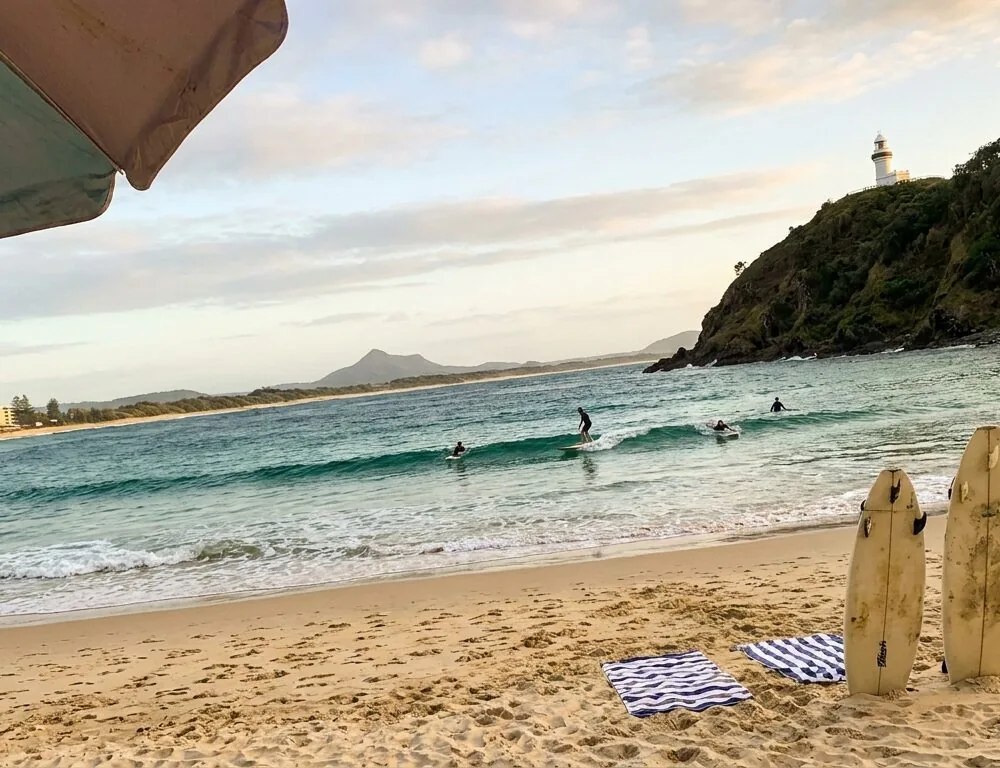
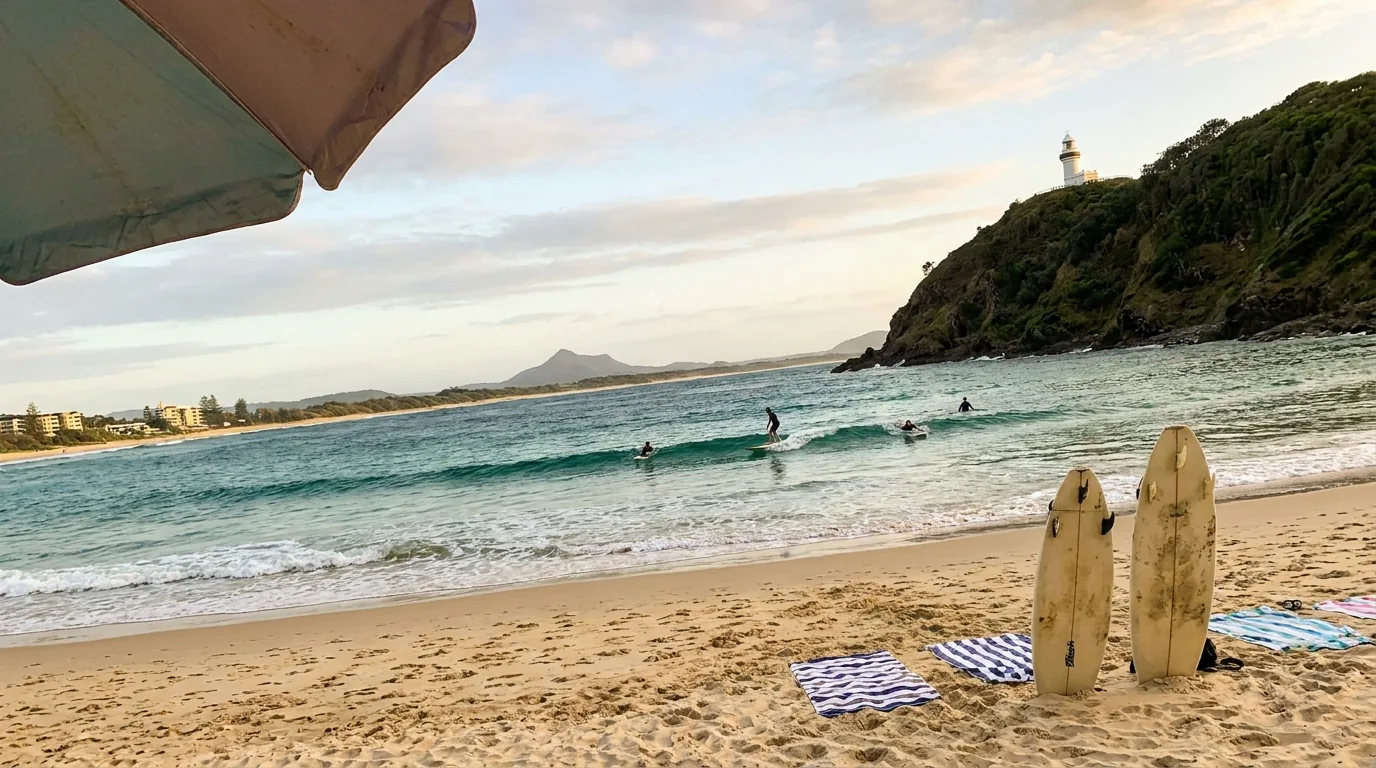
Strip the partner hotels and four-paragraph filler out of a standard NSW road-trip article and almost nothing is left. We did the homework instead. This is a research briefing on the Sydney to Byron Bay road trip, written from a desk in Casablanca, drawing on Destination NSW’s regional pages, Bureau of Meteorology coastal weather records, Transport for NSW road-condition data, and Tourism Australia’s daily-spend figures. No partner links, no fabricated cellar-door notes, no padding.
The questions a real visitor asks about a Sydney to Byron Bay road trip are simpler than most guides admit. How long does it really take. What does it cost. When does the weather work. Where should you stop, and which towns are worth driving past without unbuckling. We will answer those in that order, with sources you can verify.
The route is 830 kilometres door to door, closer to 1,000 with the detours that make the trip worth taking. Seven days is the right length — any less and you are mostly driving; any more and you are paying to sit in a Byron café you could have flown into.
Quick facts
- Distance: 830 km Sydney → Byron Bay (1,000 km with detours)
- Cost (7 days, mid-range, per person): AUD 2,200–3,000 excluding flights
- Best time: September–November or March–May (avoid Dec–Jan school holidays)
- Drive time: 12 hours total, split across 7 days
- What to skip: Most Pacific Highway towns between Coffs and Byron
What most road-trip guides get wrong
The first thing most Sydney to Byron Bay road trip articles get wrong is the timing. Guides built for SEO routinely suggest the drive in three days, which on paper looks possible — 830 kilometres at motorway speeds is twelve hours of driving. In practice, three days means leaving Sydney before breakfast, treating the Hunter Valley as a photo stop, sleeping in Coffs out of obligation, and arriving in Byron exhausted. Five days works if you skip the Hunter. Three is a transfer, not a trip.
The second mistake is skipping the Hunter Valley. The Hunter sits two hours north of Sydney on the route up, and the only reason to drive past it is if you do not drink wine and do not eat. Cellar-door tasting fees run AUD 10 to 25 and are usually waived with any purchase, so an afternoon at two estates costs the price of one bottle. Treating it as a side trip rather than a stop adds forty minutes to the drive and pays for itself in one good meal at Pokolbin.
The third mistake is treating Coffs Harbour as a fuel stop. Yes, the Big Banana is on the highway and yes, it is a Big Banana. But Coffs has Mutton Bird Island, a working jetty walk, and a beach strip that deserves an overnight rather than a coffee break. Pushing through Coffs in a single drive is the most common reason travellers tell us the trip felt rushed.
The fourth mistake is assuming weekday Byron rates apply on the weekend. Byron’s accommodation pricing decouples from the rest of the NSW coast on Friday afternoon and stays decoupled until Sunday evening, year-round. A room that is AUD 220 on a Tuesday is often AUD 380 on a Saturday, with a two-night minimum. Flex the nsw 7 day itinerary to land midweek and the savings are roughly a tank of fuel per night.
Best time to drive Sydney to Byron Bay
The best window for the Sydney to Byron Bay road trip is late September to November in spring, or March to May in autumn. Both windows give you 22 to 28°C days on the coast, water that is still swim-warm into April, manageable accommodation pricing, and rainfall that stays comfortably below the wet-season averages tracked by the Bureau of Meteorology’s NSW coastal stations. The shoulder seasons also coincide with humpback migration past Cape Byron — September to November southbound with calves, June to August northbound — which is a bonus for anyone willing to walk the lighthouse track at dawn.
Summer (December to February) works for the swimming but not for the budget. Mid-December through late January is school holidays, and accommodation along the entire north coast lifts 40 to 70 per cent. Byron in early January is a different town: the population triples, the main strip is queue-only after 6pm, and the road into Wategos backs up. Drive the Sydney to Byron Bay road trip in summer if you must, but build the booking calendar weeks ahead.
New south wales in winter is the underrated option. June to August on the coast is mild rather than cold — Sydney sits at 13 to 18°C, Byron at 16 to 20°C — and the drive itself is unaffected. The catch is that visitors used to summer-equivalent expectations find the water too cool for comfortable swimming, particularly north of Coffs Harbour where the East Australian Current stops doing its warming work. Winter also coincides with humpback northbound migration, which is genuinely worth pulling off the highway for. Accommodation is at its cheapest of the year. If your trip is to look at landscapes, walk lighthouses, and eat well rather than to swim every afternoon, new south wales in winter is the best-value version of the drive.
The window to actively avoid, beyond peak summer, is the late-January cyclone tail. Tropical systems forming off the Queensland coast occasionally drag rain bands as far south as the Tweed. Rare, but worth checking the BOM seven-day forecast before committing to the long Coffs-Byron leg.
What this 7-day NSW itinerary actually costs
A 7-day Sydney to Byron Bay road trip costs roughly AUD 2,200 to 3,000 per person, mid-range, excluding the international flight. Cross-checked against Destination NSW’s regional cost ranges and Tourism Australia daily-spend figures:
- Car hire (small SUV from Sydney Airport, 7 days): AUD 50 to 80 per day, AUD 350 to 560 total. One-way drop-off at Gold Coast Airport adds roughly AUD 150; Ballina-Byron Airport adds AUD 100 to 200.
- Fuel: 830 km plus detours is roughly 1,000 km. At 7 L/100 km and AUD 1.85 per litre, that is AUD 130.
- Accommodation (mid-range, 6 nights): AUD 160 to 240 per night, AUD 960 to 1,440 total. Byron skews the upper end; the Hunter and Coffs pull the average down.
- Food (mid-range, 7 days): roughly AUD 80 per person per day, AUD 560 total.
- Activities: Hunter cellar-door fees and a tasting lunch (AUD 80 to 140), a Port Stephens dolphin cruise (AUD 35 to 55), Cape Byron lighthouse parking (AUD 8), an optional Byron surf lesson (AUD 75 to 95). Allow AUD 200 to 400 across the week.
That puts a solo mid-range traveller at AUD 2,200 to 3,000 for the week. Couples splitting accommodation drop to AUD 1,700 to 2,200 per person. Backpacker version — hostels, supermarket breakfasts, walks and a single cellar door — lands closer to AUD 1,200. The nsw 7 day itinerary is cheaper than the equivalent week in Sydney alone, because the coastal stops carry markedly lower hotel pricing.
The line item to negotiate hardest is car hire. Sydney Airport rates swing sharply by lead time; booking eight to ten weeks ahead can take 30 per cent off the daily rate.
The 7-day Sydney to Byron Bay road trip itinerary
The full 7-day Sydney to Byron Bay road trip splits into six driving days plus a stationary day at the end. Day-by-day distances and overnights below.
Days 1-2: Sydney
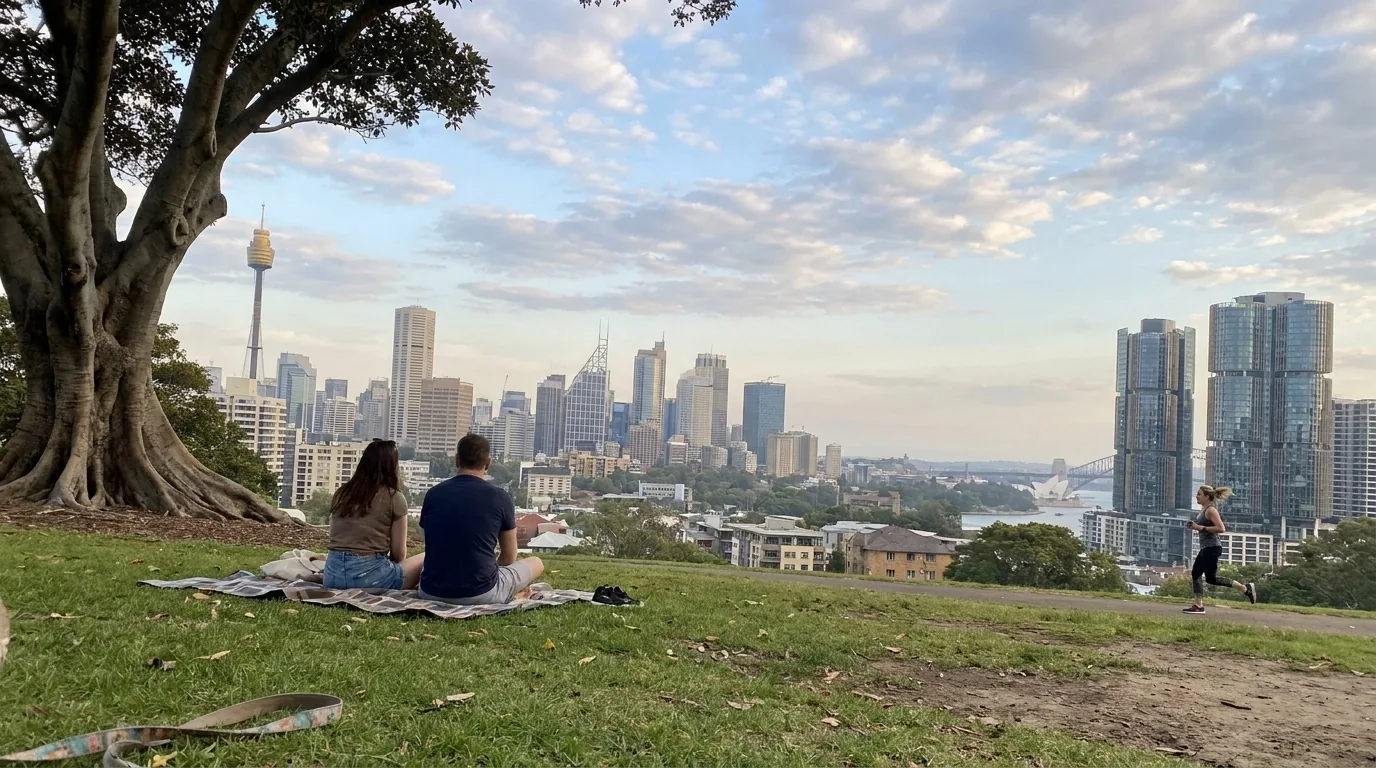
Two days is enough to see the harbour properly without trying to do everything. Land Friday or Saturday, take the train from the airport to Central, drop bags at a CBD or Surry Hills hotel, walk to Circular Quay. Day one is the postcard circuit: Opera House from water level on a Manly ferry, the Harbour Bridge on foot, dinner with a view in the Rocks. Day two is the Bondi-to-Coogee coastal walk (six kilometres of sandstone clifftop, three swimmable beaches), a long lunch in Bronte, and an afternoon through Paddington or Surry Hills before a final harbour ferry at sunset. Our Sydney 2-day itinerary is the hour-by-hour companion piece.
The Opal card covers train, bus, ferry, and light rail. Daily cap AUD 17.80 weekdays, AUD 8.90 weekends. Skip the hire car in Sydney itself — pick it up at the airport on the morning of day three.
Day 3: Sydney to Hunter Valley
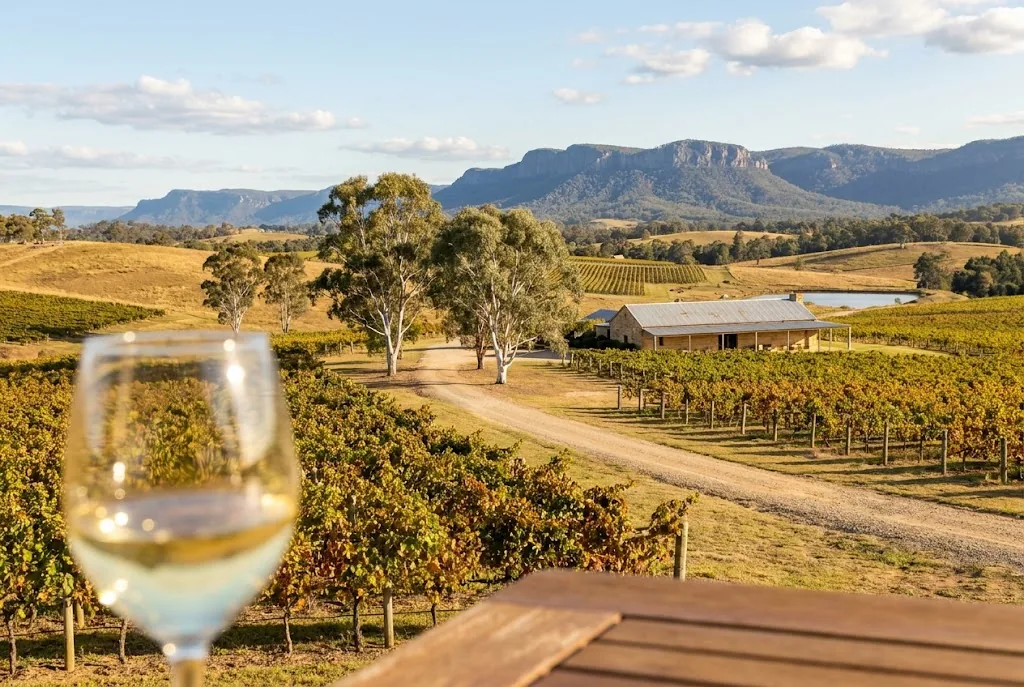
Two-hour drive, 160 kilometres up the M1 and west into Pokolbin. Pick up the rental car at Sydney Airport in the morning, clear the city by 10am to avoid the western Sydney bottleneck, and you are at the first cellar door before lunch. The Hunter has more than 150 estates; trying to taste at ten in a day is a worse experience than choosing two or three properly. A useful contrast pair is Audrey Wilkinson — heritage producer founded 1866 — and Hungerford Hill, whose modern building is one of the few pieces of contemporary cellar-door architecture worth pulling over for. Have a long lunch at one of them, taste lightly at the second, and check into Pokolbin or Lovedale for the night.
The Hunter specialises in Semillon and Shiraz. A designated-driver tour from Pokolbin (AUD 110 to 150 per person) means both of you can taste; otherwise, agree on a sober driver before pouring starts.
Day 4: Hunter Valley to Port Stephens
Two-and-a-half-hour drive, 130 kilometres east to the coast and up to Nelson Bay. Leave the Hunter mid-morning, stop at Nobbys Beach in Newcastle if timing works, reach Port Stephens by lunch. The afternoon is for Stockton Beach — 32 kilometres of coastal sand dunes accessible by 4WD tour from Anna Bay (AUD 50 to 80 for 90 minutes). Dolphin-watching cruises depart Nelson Bay hourly in the warmer months; the resident bottlenose pod has near-100 per cent sighting rates. Stay overnight in Nelson Bay or Shoal Bay.
Day 5: Port Stephens to Coffs Harbour
The longest day. Four-and-a-half hours of Pacific Highway and motorway, 380 kilometres. Stop at Forster for lunch and aim to be in Coffs Harbour by mid-afternoon. Coffs deserves more than a fuel-stop: walk to Mutton Bird Island via the breakwall (45 minutes return, sea-eagle nests in spring), wander the jetty strip at sunset, dinner at one of the harbour-side seafood places. The Big Banana is two kilometres north — worth the photo stop only if travelling with children. Stay overnight in Coffs.
Day 6: Coffs Harbour to Byron Bay
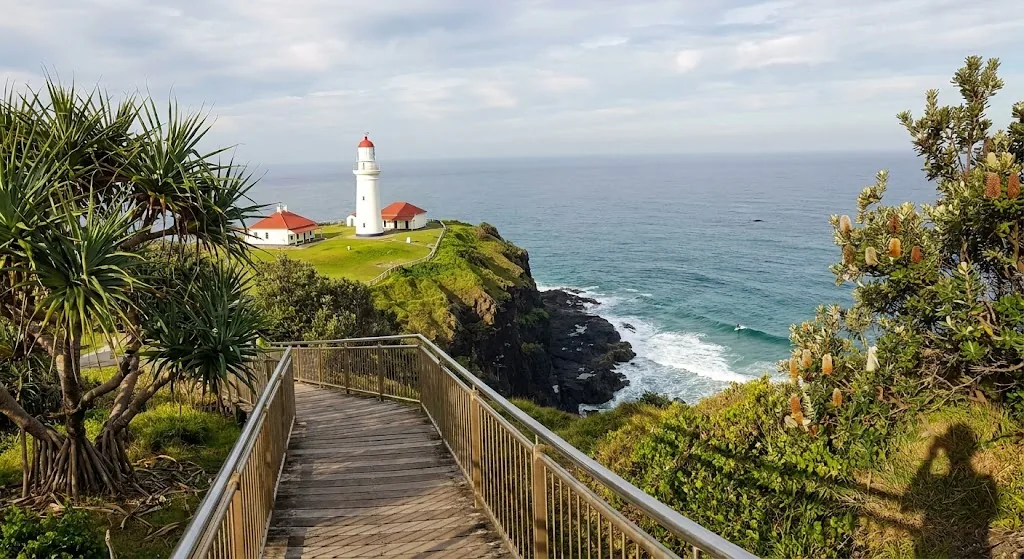
Three-and-a-half-hour drive, 240 kilometres. The Pacific Highway between Coffs and Byron is the prettiest stretch — forested ridge with ocean glimpses — but most of the towns alongside it are skip-able. The exception is Yamba, 20 minutes off the highway at the mouth of the Clarence River. Yamba is what Byron was twenty years ago: working fishing town, deep main beach, two reliable bakeries, no queue. Take an early lunch there and you arrive in Byron by mid-afternoon with light still in the day. Park, check in, and walk the Cape Byron Walking Track loop in the late-afternoon golden hour — three-and-a-half kilometres, 250 metres of climbing, mostly sealed path.
Day 7: Byron Bay
A full day in Byron without a steering wheel. The lighthouse loop you walked at sunset on day six is worth doing again at sunrise — different light, fewer people, often resident dolphins visible from the easternmost point of the Australian mainland. After breakfast, swim or longboard at Wategos Beach, the most sheltered of Byron’s beaches and the easiest for non-locals to read. Tea Tree Lake in Broken Head Nature Reserve, fifteen minutes south, is the most-skipped Byron stop worth taking — the water is naturally tea-stained dark from melaleuca tannins and warmer than the ocean. End with dinner away from the main strip; our Byron Bay itinerary breaks down which restaurants are worth booking and which are riding their location.
Day-seven evening is when most travellers decide whether to extend or fly back. Ballina-Byron is 30 minutes south with daily flights to Sydney; Gold Coast Airport is 45 minutes north with broader connections.
Best places to visit in New South Wales (beyond the drive)
The drive covers the northern coast well but ignores most of the rest of the state. For travellers extending the trip or planning a return visit, the best places to visit in new south wales beyond the road-trip route sort cleanly by intent.
For an extra two or three days, the Blue Mountains are 90 minutes west of Sydney by car. Sandstone plateau, the Three Sisters at Echo Point, walking tracks from pram-friendly clifftop loops to multi-day wilderness routes. Best added before the road trip rather than after.
For winter travellers, the Snowy Mountains hold Australia’s only meaningful ski terrain. Thredbo and Perisher run June to early September, snow-cover dependent. Summer hiking to Mount Kosciuszko (2,228 metres) is a strong day walk; the chairlift from Thredbo manages the elevation gain.
For surf travellers, the south coast — Wollongong, Jervis Bay, Mollymook — is where locals drive when they want emptier breaks than the north. Jervis Bay’s Hyams Beach has an arguable claim to the whitest sand on record and is part of Booderee National Park, Aboriginal-co-managed.
For wildlife and isolation, Lord Howe Island is two hours east by air, UNESCO World Heritage listed, capped at 400 visitors at a time. Expensive and worth it.
These are the best places to visit in new south wales once the road trip is done.
Things to do in NSW besides Sydney
The Sydney-only first-time NSW trip is a missed opportunity, and the things to do in new south wales besides Sydney are the entire reason this state has been the busiest in Australia for half a century. The short list of things to do in new south wales besides Sydney, organised by what you want from a day:
- Wine and slow eating: the Hunter Valley, two hours north of Sydney. Pokolbin is the most concentrated cellar-door cluster.
- Marine wildlife: Port Stephens for resident dolphins, Eden in the south for whale-watching September to November.
- Surf and beach culture: Byron Bay, Yamba, Lennox Head on the north coast; Mollymook and Bermagui on the south.
- Hiking and dramatic landscape: Blue Mountains for sandstone country, Snowy Mountains for alpine.
- Museums and cool-climate dining: Canberra, three hours south of Sydney — free national museums, Murrumbateman wine, autumn foliage.
If you have only one card to play, the Hunter Valley overnight is the lowest-friction detour with the highest return per hour spent.
Where to spend, where to skip
Editorial opinions, after the dollar breakdown.
Spend on a Hunter Valley overnight rather than day-tripping. Day-tripping from Sydney means six hours in a car for three hours of tasting, and one of you can never drink. An overnight halves the driving and lets everyone taste.
Skip most Pacific Highway towns between Coffs and Byron. With the exception of Yamba — covered on day six — the towns between Sawtell and Brunswick Heads are either highway-stop towns or tourist clusters that look better on a map than they read on the ground. Drive through, do not overnight.
Spend an evening on the Cape Byron sunset walk. The lighthouse track at last light is the defining moment of most road-trip itineraries on this stretch. Park early, walk slowly, stay until the lighthouse turns on.
Skip the Byron town centre on Saturday nights. The strip is queue-only from 7pm onward year-round, and the food gets worse as the queues get longer. Eat in Suffolk Park or Newrybar instead, then walk the beach.
Plan the next leg
The Sydney to Byron Bay road trip is the first half of the most-driven coastal stretch in Australia. North of Byron the route continues into Queensland — the Tweed, the Gold Coast hinterland, Brisbane — and our companion piece on the Cairns to Brisbane road trip in Queensland covers the second half for travellers stitching a longer Sydney-to-Cairns coastal trip.
For travellers heading south, our Victoria travel guide covers the Great Ocean Road and the Mornington Peninsula in the same depth. For visitors planning the broader trip, the Saltrove guide on how to plan a trip to Australia walks through visa, flights, and route-pairing decisions. Saltrove publishes more regional briefs through the year; the newsletter catches the next one.
M. Saltrove is the editor of Saltrove. Based in Casablanca, Morocco, M. researches Australian travel from primary sources — government data, weather records, traveler reports — and writes from a desk, not a campervan. Each article notes whether it is a field report or a research briefing. This piece is a research briefing.
Frequently asked questions
How long does it take to drive Sydney to Byron Bay?
Roughly twelve hours of driving across 830 kilometres of motorway and Pacific Highway. Doable in a single day; not recommended. Three days is the practical minimum if you skip the Hunter; seven days is the version that lets you stop properly. The Sydney to Byron Bay road trip is paced for seven days for that reason.
What is the best month for the Sydney to Byron Bay road trip?
October–November or March–April. Spring brings warmer water, autumn brings cheaper accommodation. Both avoid the December–January school-holiday surcharge and the late-January cyclone tail. New south wales in winter (June–August) is fine for the drive itself but cool for swimming north of Coffs.
Is the Sydney to Byron Bay road trip safe?
Yes. The Pacific Highway is dual-carriageway motorway for most of its length — well-graded, well-signed, fuelled every 50 to 80 kilometres. NRMA roadside assistance covers most breakdown scenarios. The two cautions are speed cameras (rental companies pass on infringements with an admin fee) and weekend traffic out of Sydney heading north on Friday afternoons.
Can you do this drive without a car?
Not realistically. Greyhound and Premier coaches run Sydney to Byron via the Pacific Highway daily, and Ballina-Byron Airport has daily flights from Sydney. Either lets you skip the drive. But the entire premise of an nsw 7 day itinerary along this route is the freedom to stop at the Hunter, Port Stephens, and Yamba — none of which are well-served by public transport. Hire a car or skip the road-trip framing.
How much does a 7-day NSW itinerary cost?
Roughly AUD 2,200 to 3,000 per person, mid-range, excluding the international flight to Sydney. Couples splitting accommodation land at AUD 1,700 to 2,200 per person. Backpacker version (hostels, self-catering) is closer to AUD 1,200. Car hire and Byron weekend rates are the two line items most likely to inflate the figure.
What about NSW in winter?
New south wales in winter is the underrated season for this drive. Coastal temperatures sit at 13 to 20°C, accommodation pricing is at its cheapest of the year, humpback migration runs past Cape Byron northbound June–August, and the drive itself is unaffected. The trade-off is cool ocean water — Byron in July sits at 19°C, swimmable but not warm. If you are travelling for the landscape and the food rather than the swim, new south wales in winter is the value pick.
What are the best things to do in New South Wales besides Sydney?
The Hunter Valley overnight, a Port Stephens dolphin cruise, the Cape Byron lighthouse walk, Yamba's main beach, and a Blue Mountains day from Sydney all read as the highest-return things to do in new south wales besides Sydney. The first three are built into this 7-day road trip; the last two are easy add-ons before or after.
Where should you stay in Byron Bay?
Suffolk Park or Belongil for first-time visitors who want quiet — five minutes from the town centre, cheaper, beach access. Wategos for splurges, with the only walk-from-bed access to the Cape Byron track. The town centre is convenient but loud on weekends; expect a 40 to 60 per cent premium for a Friday-Saturday stay year-round.