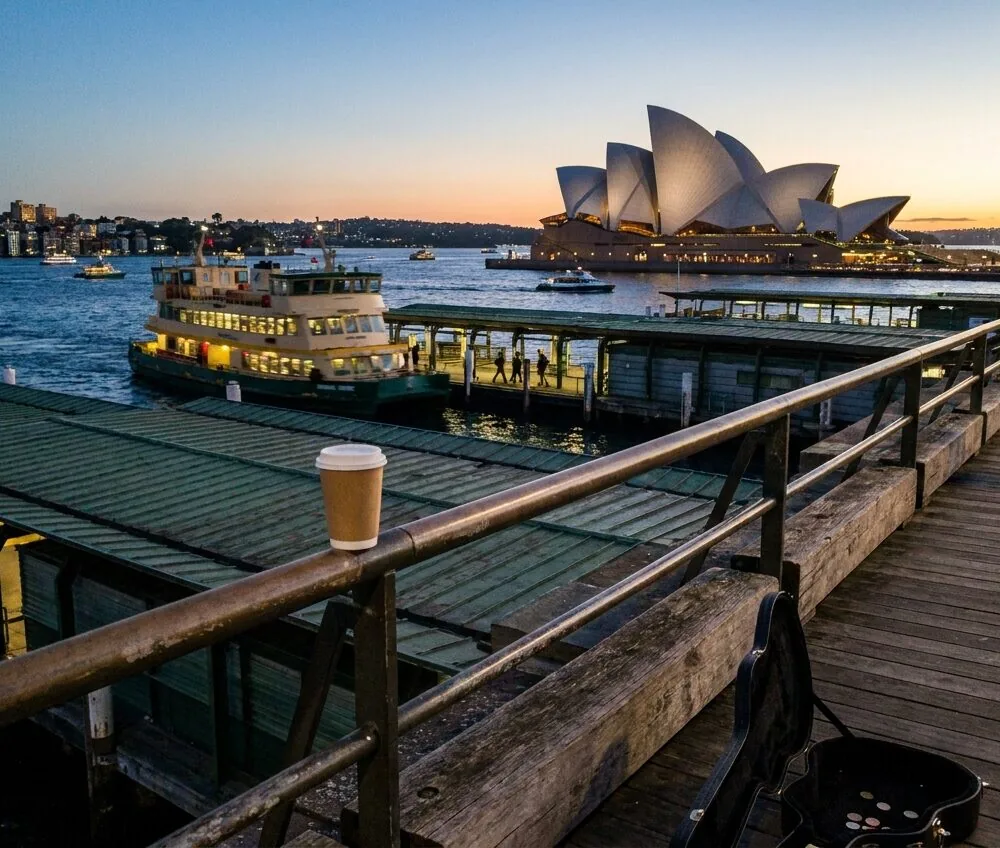
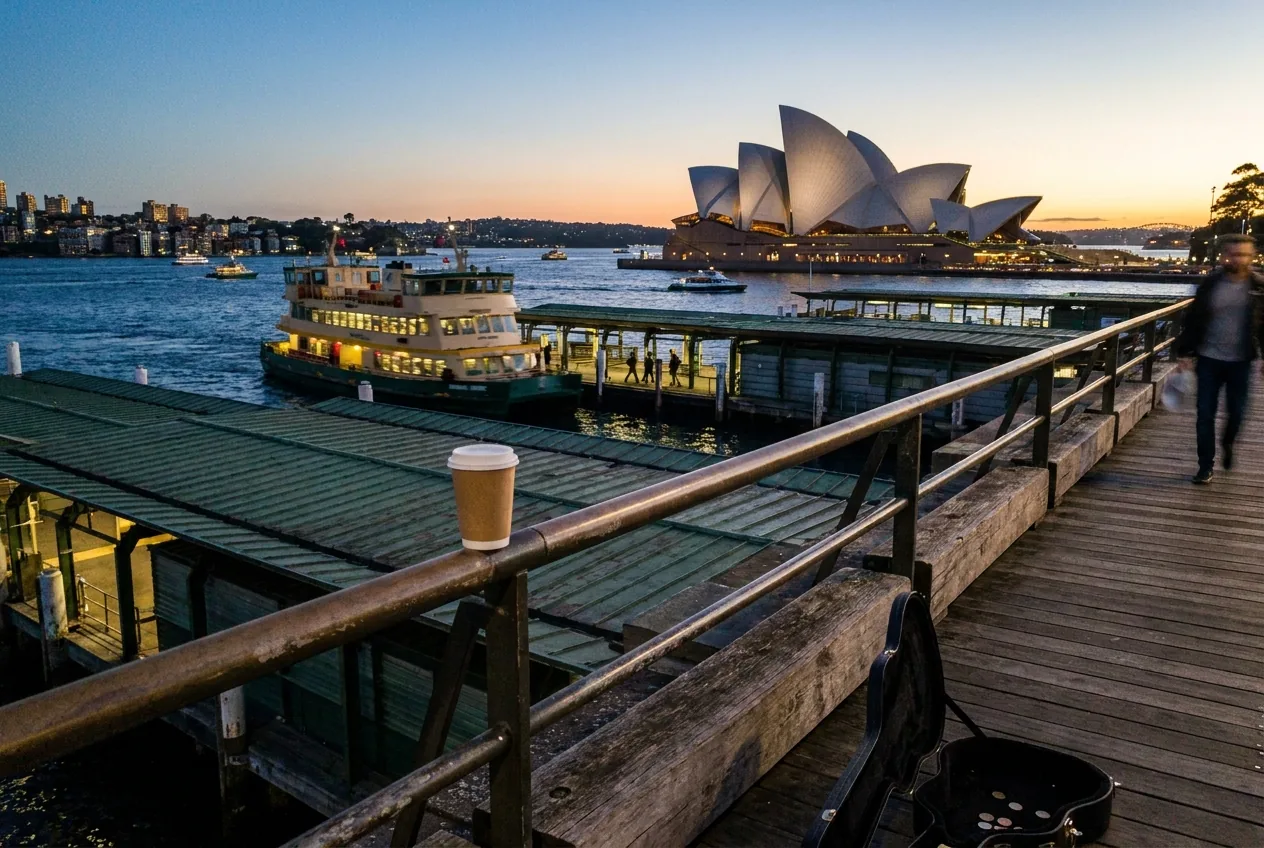
Planning a trip to Australia means cutting through a lot of advice that is really an affiliate funnel: partner hotels, paid tour operators, and booking links engineered to earn the writer a commission rather than help you. We are not running that play. This is a research briefing, written from a desk in Casablanca, drawing on Tourism Australia’s official planning data, the Department of Home Affairs visa pages, and Bureau of Meteorology weather records. No partner links, no fabricated personal anecdotes, no padding to hit a word count.
The questions a real visitor actually asks when learning how to plan a trip to Australia are simpler than most guides admit. How much will it cost. When should I go. Do I need a visa. How long do I need. What is worth the flight from the United States or Canada, and what is being oversold. We will answer those, in that order, with sources you can verify yourself.
Quick facts
- Best time: April–May or September–October (May–October for tropical north)
- Cost (2 weeks mid-range, per person from US): USD 4,500–6,500 including flights
- Visa: AUD 20 ETA via official Australian ETA app
- Length: Two weeks minimum, three weeks better
- What to skip: Four cities in ten days — pick two regions
What most guides get wrong
The first thing most “how to plan a trip to Australia” articles get wrong is scale. Australia is 7.7 million square kilometres — almost the same area as the continental United States. Sydney to Perth in a straight line is about 3,300 km, and by road it is closer to 4,000. A trip that “covers Australia” in ten days does not exist; what exists is a trip that spends ten days in airports.
The second mistake is seasonal mush. Generic guides tell you “the best time to visit Australia is spring or autumn,” which is true for Sydney and Melbourne and meaningless for Cairns, where the same months sit at the edge of the wet season and the bottom-line decision is whether to swim at all. The country has at least three distinct climates running at the same time, and a useful answer needs to name the region first.
The third is visa misinformation. Search “australia eta visa cost” and the first three results are usually third-party sites charging USD 49 to 299 for a service the Australian government provides for AUD 20. The resellers are technically legal — they “process” the application on your behalf — but the markup is 200 to 1,500 per cent for typing your passport number into a form you could fill out in eight minutes on your phone.
The fourth is the affiliate-driven daily-budget figure. Articles routinely quote “USD 250 a day” as a mid-range Australia budget without breaking out where the money actually goes. Real costs are weighted heavily toward two line items — accommodation and internal flights — and you can move both significantly with shoulder-season timing.
Anyone serious about how to plan a trip to Australia has to set those four assumptions aside before the rest of the planning starts to make sense.
Best time to visit Australia (by region, by month)
The first decision in how to plan a trip to Australia is when. The honest answer to “best time to visit Australia 2026” depends on where you are going. Below is a month-by-month verdict drawn from Bureau of Meteorology climate averages and Tourism Australia’s seasonal planning guidance.
Sydney and the New South Wales coast: September-November and March-May. December-February is hot, humid, and crowded; June-August is mild but ocean swimming gets cold (around 16°C). For Byron Bay specifically, our Byron Bay itinerary makes the same call regionally.
Melbourne and Victoria: October-November and February-April. Melbourne weather is genuinely volatile year-round — the “four seasons in one day” line is not a joke — but the shoulders give you the longest stretches of stable conditions. Winter (June-August) is tolerable for cafes and galleries but cold for the Great Ocean Road.
Cairns, the Great Barrier Reef, and tropical Queensland: May-October only. The wet season runs November through April, with a stinger window (jellyfish in coastal waters) October to May. Reef visibility peaks June-September. Our 10 Things to Do in Cairns guide covers what is open in the dry season versus the wet.
Uluru and the Red Centre: May-September. Daytime temperatures in the desert summer (December-February) regularly exceed 40°C, and most walking trails close in the afternoons under park-issued heat warnings.
Perth and Western Australia: September-November for wildflowers; March-May for beach days without the worst heat.
A practical rule: if you can only travel in the northern summer (June-August), point yourself at Cairns and Uluru and accept that Sydney and Melbourne will be cold. Shoulder travellers have the run of the country.
Australia trip cost: real numbers
The second question in how to plan a trip to Australia from North America is the bill. Here is what an Australia trip cost actually looks like for a US or Canadian traveller in 2026, broken into the components that move the most.
International flights (round trip, US to Australia): USD 1,300-3,000 for economy on a major carrier (Qantas, United, Delta, American). Peak December and early January push USD 3,000-3,500. Shoulder months (May, September) drop into the low USD 1,300s on West Coast departures. East Coast and Midwest departures add roughly USD 200-400. Booking 3-5 months out and using a flexible-date search are the two changes with the biggest payoff.
ETA visa: AUD 20, which is roughly USD 13. Detail in the next section.
Accommodation (per night, per room):
- Backpacker dorm or basic hostel: AUD 35-55 (USD 24-37)
- Mid-range hotel or solid Airbnb: AUD 180-260 (USD 122-176)
- Luxury hotel: AUD 450-900+ (USD 305-610+)
Daily food and transport (per person):
- Budget (cooking some meals, public transport, hostels): AUD 60-90 (USD 41-61)
- Mid-range (cafes and casual restaurants, occasional taxis): AUD 110-160 (USD 75-108)
- Luxury (fine dining, private transfers): AUD 250+ (USD 170+)
Internal flights (one-way, economy): AUD 120-260 (USD 81-176) on Jetstar or Virgin for short-haul; AUD 250-450 (USD 170-305) for cross-country routes like Sydney-Perth or Sydney-Cairns.
Add it up for a two-week mid-range trip from the US: roughly USD 1,800 flights + USD 13 visa + USD 2,450 accommodation + USD 1,260 daily costs + USD 350 internal flights = around USD 5,870 per person before souvenirs and tours. A frugal traveller staying in hostels and self-catering lands closer to USD 3,200; a luxury traveller clears USD 12,000.
These ranges are synthesized from Tourism Australia pricing guidance, Australian Bureau of Statistics overseas-arrivals data, and market reporting from established travel cost trackers (Nomadic Matt, Going.com, BudgetYourTrip) cross-referenced for 2026 conditions. Costs vary by season and region. They are not promotional numbers; they are what the country actually charges.
The Australia ETA visa: what you actually pay
The Australia ETA visa cost is AUD 20, full stop. Not USD 49, not USD 89, not the USD 299 some third-party sites charge. The visa fee itself is AUD 0; the AUD 20 is a service charge for processing the application through the official Australian ETA mobile app.
Per the Department of Home Affairs ETA page, the ETA (subclass 601) is available to passport holders from a defined list of countries, including the United States and Canada. It permits multiple entries over twelve months, with stays of up to three months at a time. You apply through the Australian ETA app (iOS or Android) — linked from the Home Affairs page, not any other site.
The application takes about ten minutes and most decisions come through within minutes to a few hours. You will need:
- Your passport (the app reads the chip via NFC)
- A clear photo taken inside the app
- A working credit card for the AUD 20 fee
- A travel email address you can monitor
If a website is asking for USD 50 or more to “expedite” or “guarantee” your ETA, it is a reseller. The ETA is electronically linked to your passport — no document is mailed, no sticker is added — so paying a third party gives you nothing the government does not already give you for AUD 20. This is the single largest avoidable cost in figuring out how to plan a trip to Australia, and it is the easiest one to fix.
How long do you actually need?
The third question in how to plan a trip to Australia is duration. Two weeks is the floor. Three weeks is better. One week is a layover.
The reasoning is geographic. The shortest sensible Australia trip covers two regions, because flying twelve to fifteen hours from North America to spend it all in one city is a poor return on the airfare. Two regions means at least one internal flight — Sydney to Cairns, for example, is about 2,400 km and three hours in the air. Add a third region (Uluru, Melbourne, or Perth) and you are adding another 2-4 hours of flight time and a full transition day on each end.
Some quick distance math from Geoscience Australia’s official measurements:
- Sydney to Cairns: 2,420 km (3 hr flight, 25 hr drive)
- Sydney to Melbourne: 880 km (1.5 hr flight, 9 hr drive)
- Sydney to Uluru: 2,840 km (3.5 hr flight via connection)
- Sydney to Perth: 3,936 km (5 hr flight, the longest single domestic flight in the country)
A two-week itinerary fits two or three regions comfortably. Three weeks fits three regions plus a slow-down stop. Anything shorter and you are moving every other day, seeing landmarks instead of places.
Duration is the hinge in how to plan a trip to Australia: every other decision flexes around it.
A 2-week itinerary that actually works
Here is an Australia 2 week itinerary cost-tested on the numbers above. It is the version we recommend when readers ask how to plan a trip to Australia that does not collapse under its own ambition. It is built around the constraint most US visitors face: jet lag on arrival, jet lag on return, and limited tolerance for back-to-back internal flights.
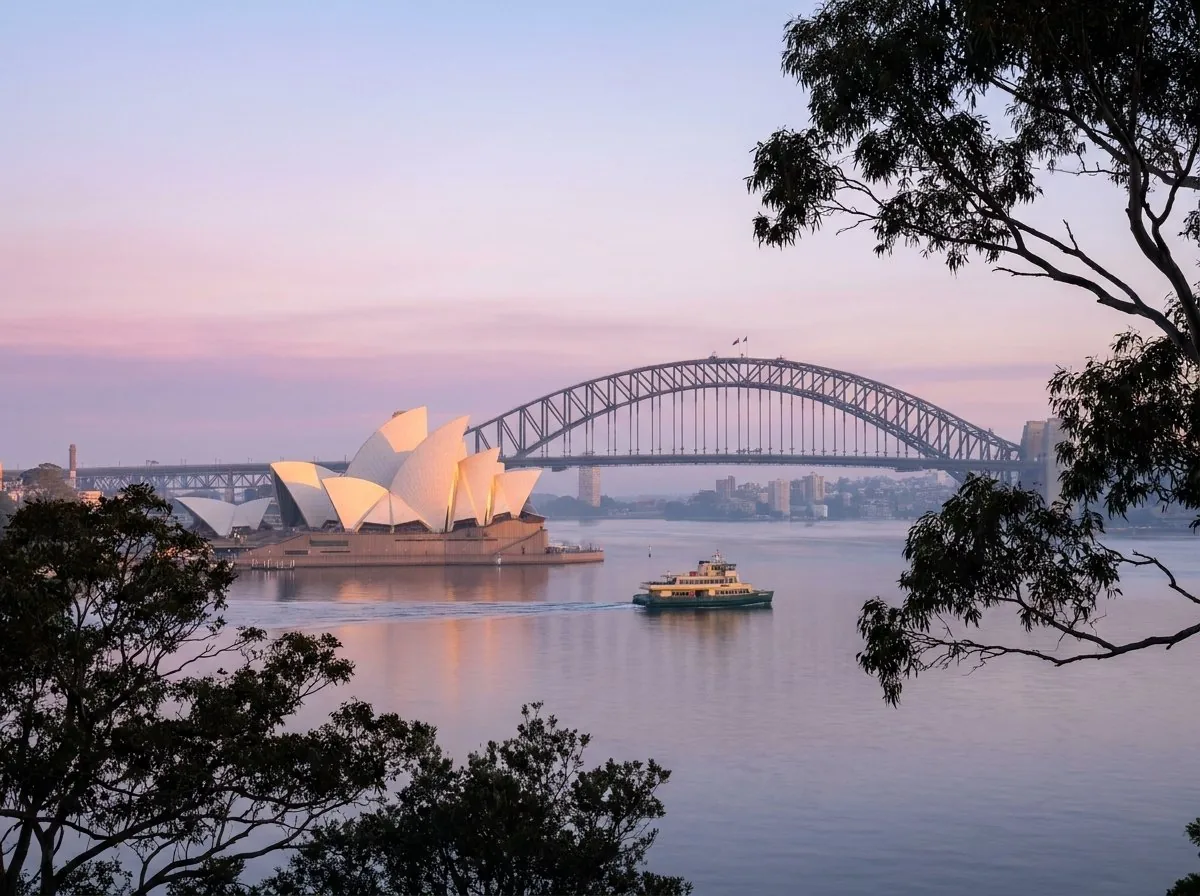
Days 1-4: Sydney (4 nights) Arrive jet-lagged, ease in. The harbour does the heavy lifting on day one — ferry to Manly, walk back along the headlands, dinner at Circular Quay. Day two is the Bridge climb or BridgeClimb-free walk across the pylon, the Opera House interior tour, and Bondi-to-Bronte in the afternoon. Day three is a Blue Mountains day trip; day four is unstructured. The full sequence is laid out in our 2-day Sydney itinerary, which scales cleanly to four days. Cost: ~USD 1,200 per person (accommodation, food, transit, ferry, one tour day).
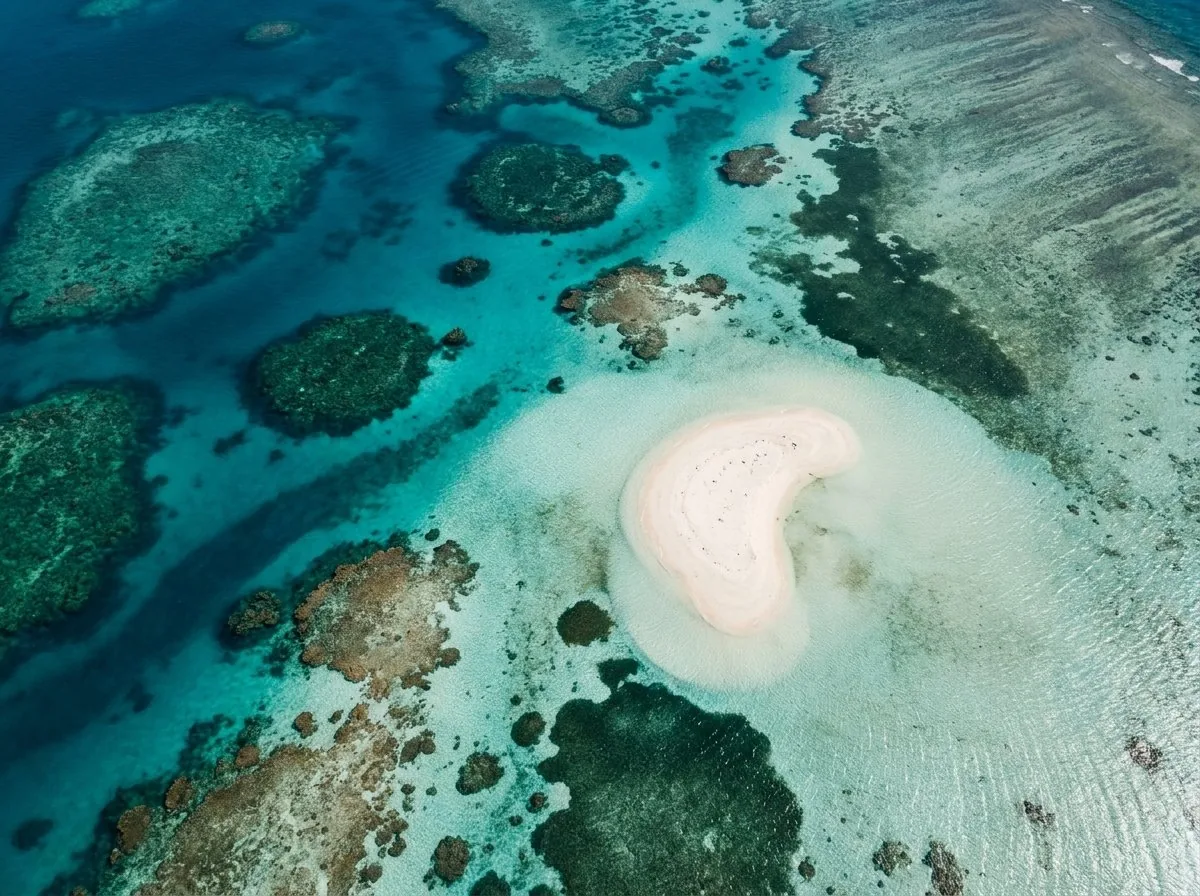
Days 5-8: Cairns and the Great Barrier Reef (4 nights) Fly Sydney-Cairns (3 hours, AUD 180-260 one way). Day five is recovery and the Esplanade lagoon. Day six is a full-day reef trip — Outer Reef, not the closer Green Island operators, which see far more boat traffic. Day seven is Daintree Rainforest or Atherton Tablelands. Day eight is buffer or a Kuranda day trip. Cost: ~USD 1,400 per person (flight, accommodation, reef trip ~AUD 250-300, food, ground transport).
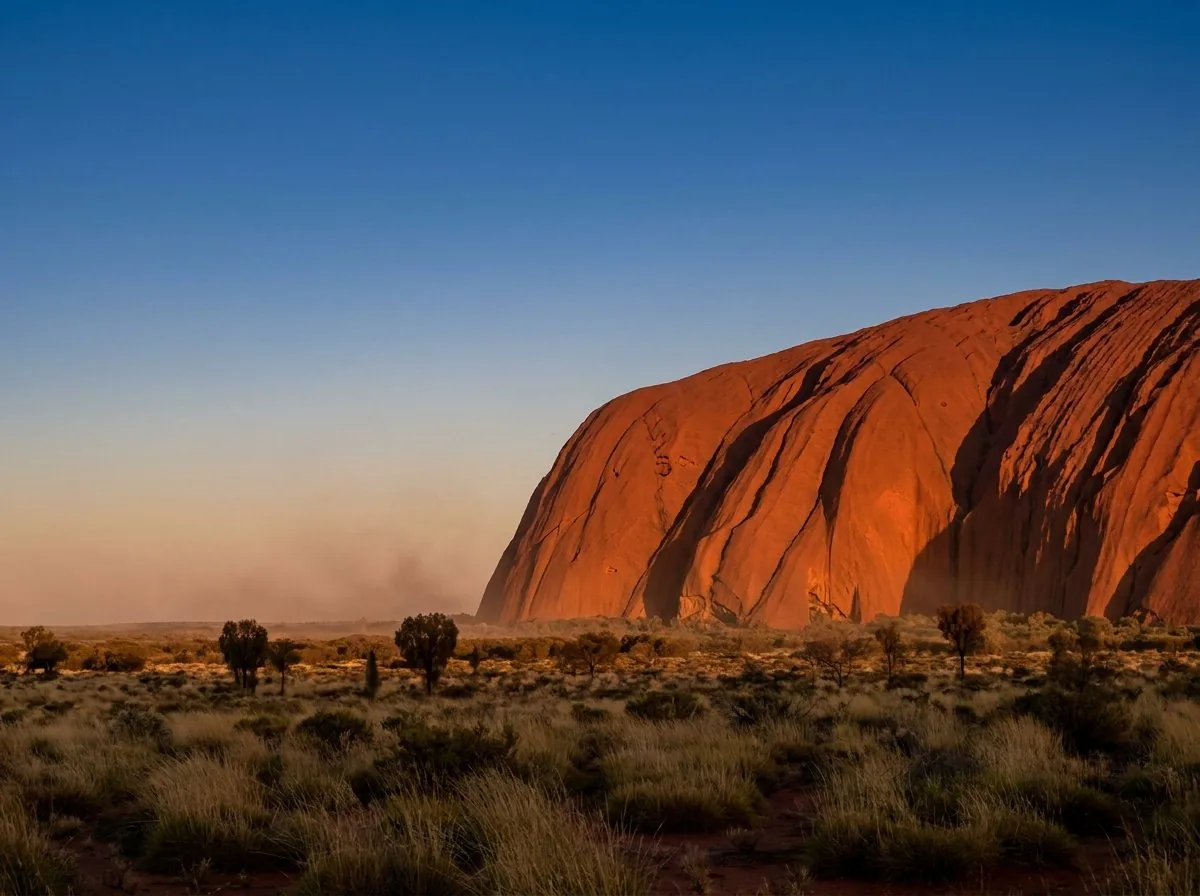
Days 9-11: Uluru and the Red Centre (3 nights) Fly Cairns-Uluru with a connection through Sydney or Melbourne (5-7 hours total, AUD 350-500). Stay in Yulara — the only accommodation cluster inside the resort. Day nine is the base walk and sunset viewing. Day ten is sunrise at the rock plus Kata Tjuta. Day eleven is the Field of Light and a quiet final morning before the flight out. Cost: ~USD 1,100 per person (flights, Yulara accommodation runs AUD 280-450/night, park pass AUD 38, meals are pricier than the cities).
Days 12-14: Sydney return + buffer (3 nights) Fly Uluru-Sydney (3.5 hr, AUD 280-380). Use the buffer for whatever the trip has been asking for — a slow day in the Inner West, the beaches you missed on the first stop, or a north coast extension to Byron Bay (1 hr flight, then the Byron Bay 5-day itinerary takes over). Fly out from Sydney international. Cost: ~USD 800 per person.
Total Australia 2 week itinerary cost (mid-range, from the US): approximately USD 4,500-5,500 per person all-in, including the international flight. A budget version of the same Australia 2 week itinerary cost lands around USD 3,200; a luxury version closer to USD 9,000. The structure holds either way — and as concrete answers go to how to plan a trip to Australia, this is the version we would book ourselves.
Where to spend, where to skip
The final question in how to plan a trip to Australia is allocation. After the flight, the decisions that move the most money — and the most enjoyment — are these.
Spend on the reef trip. A full-day Outer Reef boat with a small operator runs AUD 220-310 and is the difference between a healthy reef and a tour-bus reef. Cheaper inner-reef trips exist; they are not the same product.
Spend on Uluru sunrise and sunset. Park entry is AUD 38 — the actual cost of the experience. The expensive add-ons (helicopter tours, “Sounds of Silence” dinner) are skippable; the rock at first and last light is not.
Skip the BridgeClimb if money matters. It is AUD 290-450 per person. The pedestrian walk over the Sydney Harbour Bridge plus the pylon lookout (AUD 19) gets you 90 per cent of the view for 5 per cent of the cost.
Skip the rushed multi-city tour. Any package promising Sydney + Melbourne + Cairns + Uluru in ten days is selling airports. Cut a city.
Spend on one good dinner per stop. Australian produce is excellent and Modern Australian dining is underrated. AUD 120-180 at one strong restaurant is well-spent; AUD 60 every night at the hotel is not.
Skip car hire in cities. Sydney parking runs AUD 50-90 a day, Melbourne similar. Hire a car only for regional legs — the Great Ocean Road, the Byron hinterland, the Atherton Tablelands. The full picture for those drives is in our Victoria travel guide and New South Wales travel guide.
Together, those six choices shape the bulk of what how to plan a trip to Australia actually costs in money and energy.
Plan the next leg
The honest version of how to plan a trip to Australia ends where most guides start: with the recognition that Australia rewards depth over breadth. The two-week version of the trip described here is enough for a first visit; a third week, or a return trip, is where the country opens up. If the reef and rainforest pull is strong, our Queensland travel guide is the regional brief. If you are leaning toward coastal Australia, the New South Wales travel guide is the next stop. For a southern-state alternative, the Victoria travel guide covers Melbourne, the Great Ocean Road, and the wine country in the same editorial register. And for the broader official picture, Tourism Australia is the government source we cross-reference for everything we publish.
M. Saltrove is the editor of Saltrove. Based in Casablanca, Morocco, M. researches Australian travel from primary sources — government data, weather records, traveler reports — and writes from a desk, not a campervan. Each article notes whether it’s a field report or a research briefing. This piece is a research briefing.
Frequently asked questions
Is Australia expensive?
Yes — Australia is among the more expensive countries in the developed world, with daily costs comparable to Switzerland or Norway. A mid-range traveller should budget roughly USD 175-220 per day on the ground, plus flights and visa.
Do I need a visa for Australia?
Most US, Canadian, and EU passport holders need an ETA (subclass 601) before flying. The Australia ETA visa cost is AUD 20 through the official Australian ETA app — not through third-party processing sites that charge USD 49 to 299 for the same outcome.
What is the best month to visit Australia?
For Sydney, Melbourne, and the southern half of the country, October and April are the strongest single months. For Cairns and the tropical north, June through September. The best time to visit Australia 2026 is therefore region-specific, not country-wide.
Is two weeks enough time in Australia?
Two weeks is the practical floor. It comfortably covers two regions plus a third short stop. One week is not enough to leave a single region; three weeks is the better budget if work allows.
When are flights to Australia cheapest?
May, late August, and September from US gateways. Avoid mid-December through mid-January, when fares from North America commonly run USD 2,800-3,500 round trip.
How do I plan a trip to Australia from the United States?
Start with the region (north for reef and rainforest, south for cities and coast), pick the matching season, book the international flight 3-5 months out, file the AUD 20 ETA visa once dates are firm, then layer internal flights and accommodation. The whole sequence in how to plan a trip to Australia is region first, time second, money third — in that order.
Is the Australian Outback safe to visit?
Yes, with sensible preparation. The risks are environmental (heat, dehydration, distance between fuel stops) rather than human. Carry water, file a route with the accommodation, and do not drive desert roads at dawn or dusk when kangaroo activity peaks.
Can I see the Great Barrier Reef year-round?
Technically yes, but reef visibility and weather are reliably good only May-October. The wet season (November-April) brings reduced visibility, stinger risk in coastal waters, and frequent boat-trip cancellations.