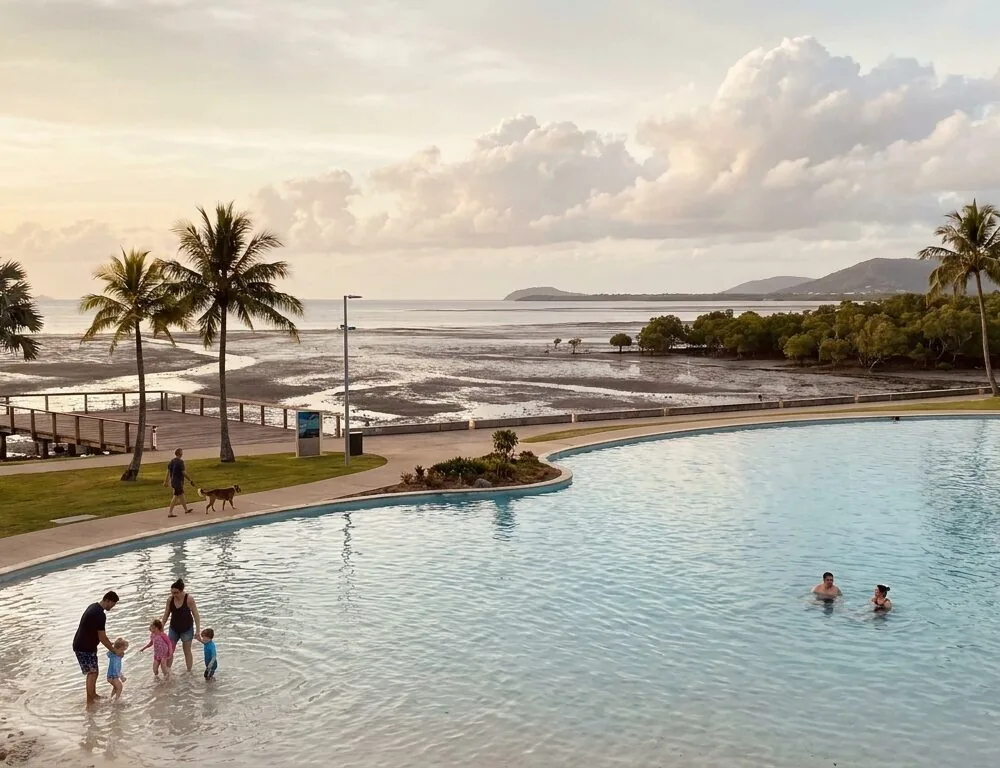
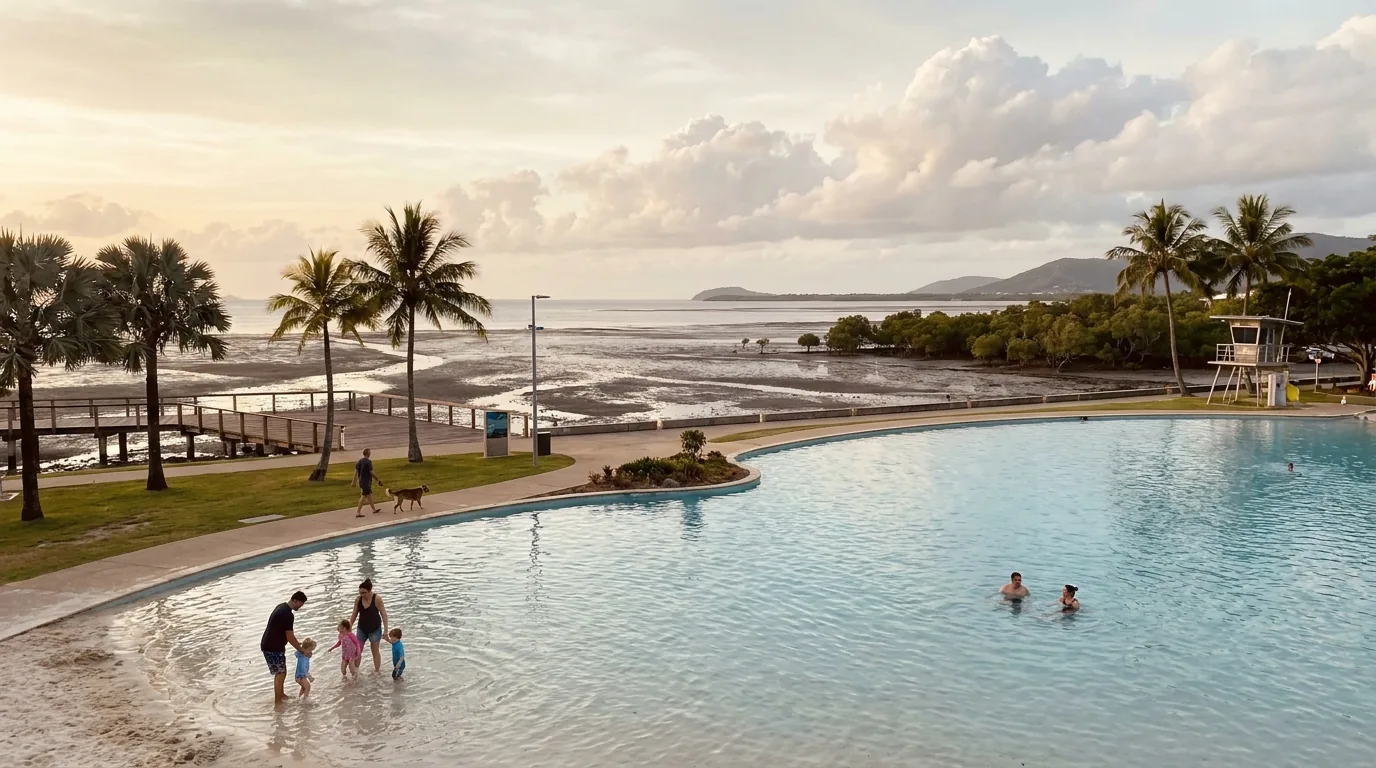
Treat the city itself as the destination and three days in Cairns will disappoint you. Cairns is a launchpad, not a destination — its value is the Great Barrier Reef forty kilometres east, the Daintree Rainforest two and a half hours north, and the Atherton Tablelands an hour up the escarpment. The city itself is a functional tropical port with one excellent free saltwater lagoon and a five-kilometre boardwalk. Spending three days inside the CBD looking for a beach is the wrong move. Spending three days using Cairns as a basecamp for the country around it is the right one.
This is a research briefing on things to do in Cairns as visitors should actually use the place — written from a desk in Casablanca, drawing on Tourism and Events Queensland, Bureau of Meteorology Cairns station data, the Great Barrier Reef Marine Park Authority, Surf Life Saving Queensland’s stinger guidance, Queensland Government water-safety notices, and the verified 2026 pricing of the major reef-tour operators. No partner links, no fabricated personal anecdotes, no padding to hit a word count.
The questions a real visitor actually asks are simpler than most guides admit. Is Cairns worth visiting. How many days in Cairns is enough. Where do you actually base yourself — Cairns CBD, the Northern Beaches, or Port Douglas. What does the reef genuinely cost in 2026. We answer those, in that order, with sources you can verify.
Quick facts
- Duration: 3 days minimum, 5 days ideal, 7 days for depth in the Daintree
- Outer reef cost (per adult, 2026): AUD 300–360 all-in — verified pricing from Sunlover, Quicksilver, Reef Magic
- Where to base: Cairns CBD for budget, Palm Cove for couples, Port Douglas only if luxury is the priority
- When NOT to swim: the city beach (mudflats and saltwater crocs in Trinity Inlet), Trinity Inlet itself, ocean water Nov–May without a stinger suit
- What to skip: Reef Hotel Casino, rushed one-day Daintree trips, Port Douglas as a budget basecamp
What most Cairns guides get wrong
The first mistake in most things to do in Cairns articles is treating the city beach as a beach. The Cairns CBD foreshore is mudflat at low tide, the inlet upstream holds saltwater crocodiles year-round, and the council had to build the Esplanade Lagoon — a free, lifeguarded saltwater pool — because there is no swimmable ocean beach in walking distance of the centre. Generic guides describe Cairns as “tropical beachfront” without mentioning any of this. Visitors arrive expecting Bondi-style sand and find a boardwalk over tidal flats.
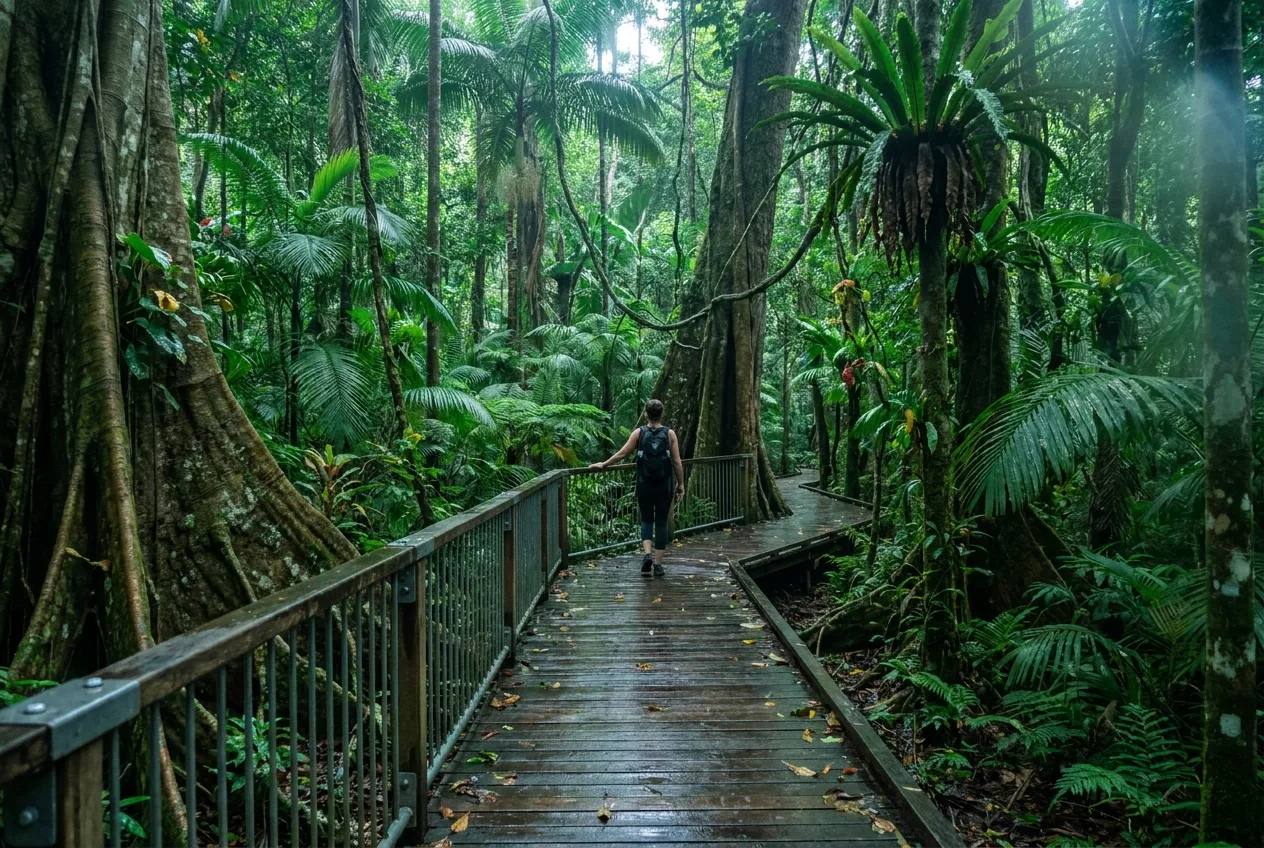
The second mistake is recommending the Daintree Rainforest as a day trip. The Daintree begins about 110 kilometres north of Cairns; Cape Tribulation is another thirty-five kilometres beyond that. A bus tour does the round trip in nine to ten hours and spends roughly five of those hours in transit. The rainforest deserves an overnight at minimum. We treat it as a one-to-two-night extension below, not as a slot in a Cairns itinerary.
The third mistake is the listicle structure itself. A “10 things to do in Cairns” format implies that ten attractions inside the city are competing for your time. They are not. Three or four matter and the rest are filler. The honest list is shorter and the geographic logic — what is forty minutes away versus what is two hours away — is what shapes the trip.
The fourth mistake is stale reef pricing. Articles still quoting AUD 200 outer-reef tours are working from 2023 numbers. April 2026 fuel-surcharge increases and the bumped marine-park EMC tax pushed every major operator into the AUD 300–360 band. Anyone serious about things to do in Cairns has to set those four assumptions aside before the rest of the planning starts to make sense.
Is Cairns worth visiting?
Yes, but only if you treat it as a basecamp. Cairns is a tropical-north logistics hub. Its value is what it enables — the reef, the rainforest, the Tablelands, the freshwater swimming holes — not what it contains. The city itself is functional rather than charming, the food scene is competent rather than destination-grade, and the headline beach is unswimmable. None of that matters if you spend most of your days outside the city limits.
The honest answer to “is Cairns worth visiting” is therefore conditional. Yes if you are coming for the reef. Yes if you want a five-day mix of reef, rainforest, and waterfalls. Probably not if you are looking for a beach holiday in the conventional sense; you would do better in Palm Cove or Port Douglas. Definitely not if your only window is January or February — that is wet season at peak intensity, with stingers in the water and rain that closes Daintree River crossings.
If you are weighing Cairns against the rest of Australia, our how to plan a trip to Australia brief covers the visa-flights-routing question. Cairns earns its place in any first trip if the reef is on your shortlist.
Where to base yourself: Cairns CBD vs Northern Beaches vs Port Douglas
This is the single most important decision in any Cairns itinerary, and most things to do in Cairns articles never frame it as a decision. Three real options, three different audiences. The port douglas vs cairns question gets asked in every visitor forum and the listicle answer is “it depends” without explaining what it depends on. Here is the actual decision framework.
Cairns CBD. Best for backpackers, solo travellers, and anyone who wants to skip the rental car. Mid-range hotels run AUD 130–220 per night in peak season; hostel dorms sit at AUD 35–55. You can walk to the Marlin Marina for an early reef boat, walk to the Esplanade Lagoon for a free saltwater swim, walk to the Friday-to-Sunday Rusty’s Markets for cheap food. The downside is honest: the city itself is loud, the foreshore is tidal mudflat, there is no swimmable beach within walking distance. If you accept those trade-offs, the CBD is the highest-leverage base for a budget Cairns itinerary.
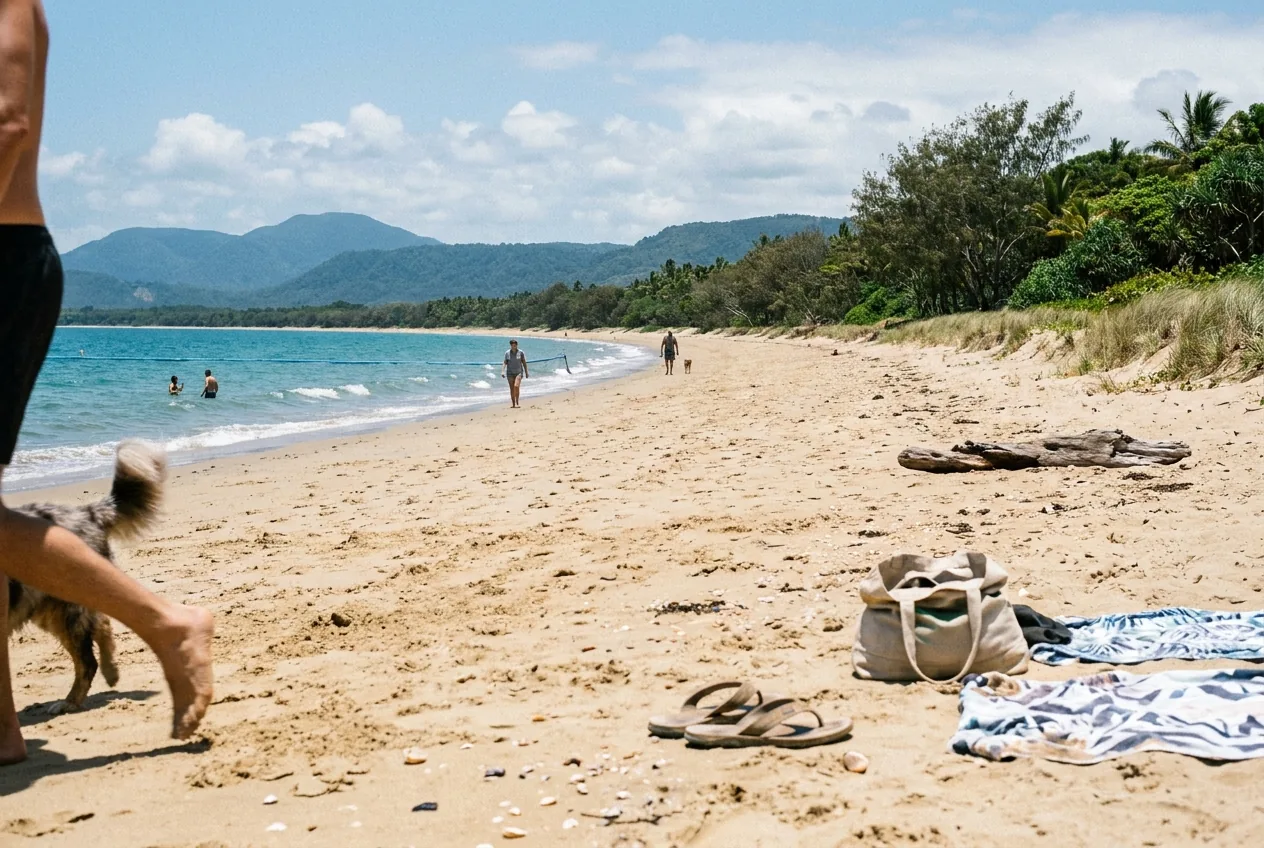
Northern Beaches — Trinity Beach, Palm Cove, Clifton Beach. Best for couples, families, and anyone wanting actual beach without resort pricing. Mid-range accommodation runs AUD 180–320 per night. The strip sits between the airport and Port Douglas; the drive to the Marlin Marina is twenty to thirty minutes. Stinger nets are installed at the patrolled beaches from November through May. Palm Cove specifically has a walkable strip of restaurants, a lifeguard-patrolled stinger-netted beach, and is twenty per cent cheaper than the equivalent room in Port Douglas. Our recommendation for couples is Palm Cove.
Port Douglas. Best for premium travellers and families with budget. Boutique hotels and resorts run AUD 280–500-plus per night. The drive from Cairns Airport is one hour. Port has its own reef fleet (smaller, slightly closer to outer-reef sites than Cairns departures), a walkable main street, and Mossman Gorge plus the Daintree River ferry on the doorstep. The trade-off is cost: reef tours from Port Douglas run AUD 40–100 more than the equivalent Cairns tour, and accommodation is twenty to forty per cent above the Northern Beaches strip for the same room class. If luxury is the trip thesis, Port Douglas wins. For most travellers, it does not.
The straightforward port douglas vs cairns recommendation: Cairns CBD for budget, Palm Cove for couples, Port Douglas only if luxury is the priority. The reef is the same reef regardless of which port you depart from.
Best time to visit Cairns (and the wet season truth)
Cairns has two distinct seasons that change what you do, not whether you should come. May to October is the dry season — lower humidity, no marine stingers in open water, flatter reef visibility, peak prices, peak crowds. July and August have the lowest overnight temperatures (around 18°C, which is sweater weather in the tropics). November to April is the wet season — tropical humidity, regular afternoon storms, a real cyclone risk peaking January and February, marine stingers (box jellyfish and Irukandji) present in ocean water, and a roughly thirty per cent drop in mid-week prices.
The honest framing: wet season changes what you do, not whether you should come. The rainforest is at its most spectacular when waterfalls are running full. Reef boats still depart most days. Stinger suits are mandatory on every reef tour from November through May; the rental fee runs about AUD 10 and every operator has them. The shoulder months — late April to early May, and all of October — are the value sweet spot. You get most of the dry-season advantages at thinner-crowd, lower-cost trade-offs.
The Bureau of Meteorology Cairns station is the authoritative source for current conditions and cyclone tracking. Surf Life Saving Queensland’s stinger and beach safety guidance is the source for what is in the water and when.
What things to do in Cairns actually cost
Real numbers shape the things to do in Cairns shortlist more than any subjective ranking. No padding — these are the line items that actually drive the trip budget in 2026.
- Outer reef day trip: AUD 300–360 per adult, all-in (operators below)
- Inner reef or Fitzroy Island day trip: AUD 130–180
- Daintree day trip with operator: AUD 240–280 (not recommended — five hours in transit)
- Daintree DIY rental car + entry fees: AUD 80–120 per day
- Esplanade Lagoon: free
- Cairns Botanic Gardens: free
- Crystal Cascades + Babinda Boulders (freshwater swim holes): free
- Skyrail rainforest cableway + Kuranda Scenic Railway: AUD 150–180 combined
- Atherton Tablelands self-drive: rental + fuel only, ~AUD 60–90 for the day
- Cape Tribulation overnight: AUD 250–450 accommodation + AUD 80 day costs
- Mossman Gorge cultural walk (Indigenous-led): AUD 85 per adult
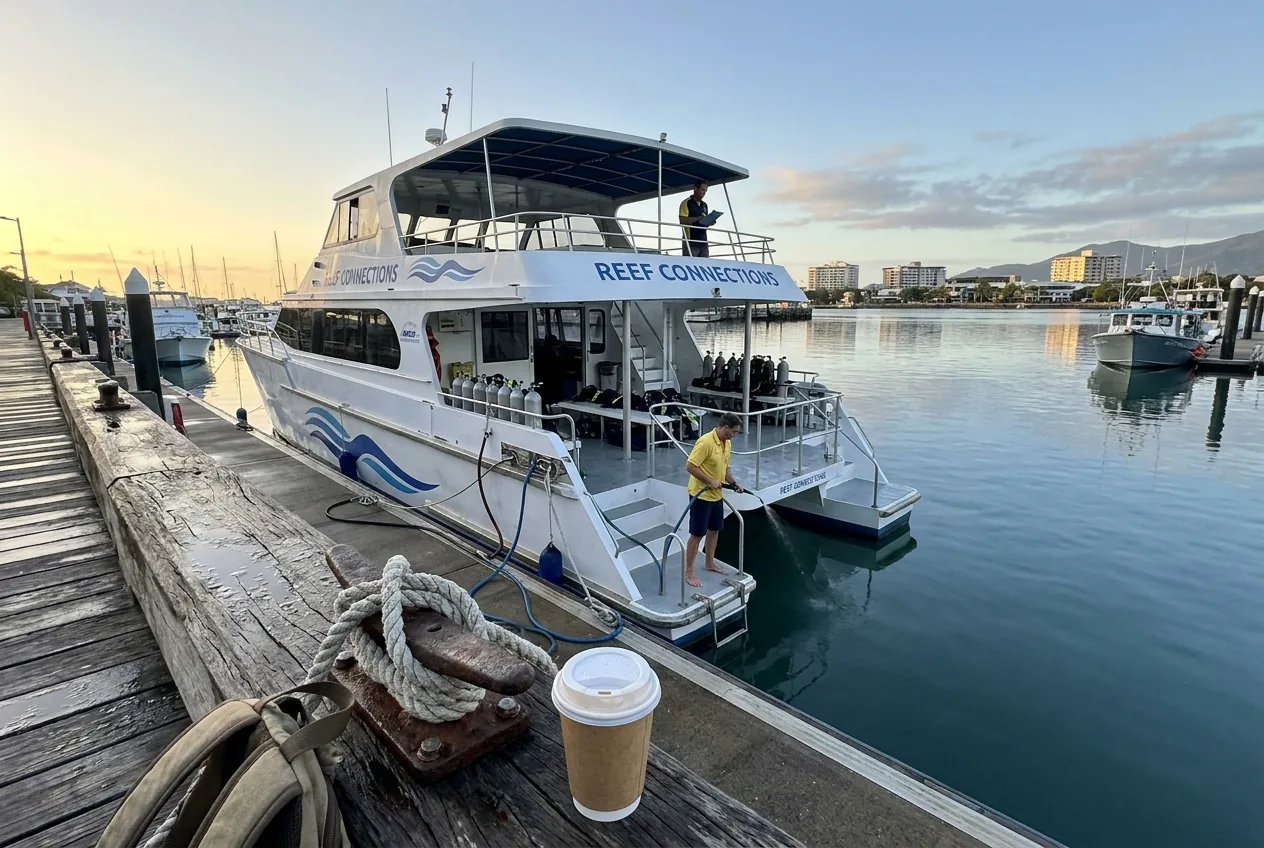
The single biggest line item is the outer reef trip. Specific 2026 operator pricing: Sunlover Reef Cruises run AUD 307–317 plus a roughly AUD 10 fuel levy; Quicksilver Cruises (Port Douglas) are AUD 338–348; Reef Magic Cruises sit at AUD 315–360; Passions of Paradise (sailing catamaran out of Cairns) is around AUD 300. Our companion brief, Great Barrier Reef on a Budget, walks through the four-tier breakdown and the hidden costs (EMC tax, fuel levy, stinger suit fee) in detail.
How many days in Cairns is enough?
Three days minimum, five days ideal, seven days if you want depth in the Daintree. Most cairns itinerary planners undershoot this. Here is the honest breakdown.
Three days. The minimum that delivers a real trip. One reef day, one Esplanade-and-Tablelands half-day, one rainforest half-day or freshwater-swim half-day. Tight but doable. Weather has no spare day, so a cancelled reef boat eats your only attempt.
Five days. The sweet spot. One reef day, one Daintree overnight (one night in Cape Tribulation), one Atherton Tablelands self-drive loop, one Fitzroy Island or Esplanade-and-markets day, one weather-spare day for reef rebooking or rest. This is the version of the trip that survives a cancelled boat without being ruined.
Seven days. Adds room for diving certification (PADI Open Water is four to five days on the reef), or photography depth in the Daintree, or a slow Tablelands week with multiple waterfall stops. Seven days is the version most people who go back to Cairns wish they had done the first time. The planning rule of thumb: add a day for every region beyond the reef you want to reach properly, and another day as weather buffer. The how many days in Cairns calculation drops sharply if you are willing to skip the Daintree, and rises if you want either a diving certification or a slow Tablelands loop.
Things to do in Cairns: the real list
This is not a 10-item listicle. The honest list of things to do in Cairns is shorter and is structured by what you actually want from the trip. Most things to do in Cairns guides try to rank attractions inside the CBD against each other; the real ranking is what is forty minutes away versus what is two hours away versus what costs nothing at all. The order below ranks core experiences over filler.
For first-timers — the must-not-miss core. An outer-reef day trip with one of the named operators above. The Esplanade Lagoon at sunset (free, lifeguarded, the best free experience in the region). A Daintree overnight, not a day trip. One free freshwater swim — Crystal Cascades is fifteen minutes from the CBD, Babinda Boulders is an hour south, and either is the right antidote on a stinger-suit-mandatory beach day.
For divers. An outer reef day trip with a small-boat operator (thirty to sixty passengers, not the two-hundred-passenger pontoons). PADI Open Water certification is four to five days and runs AUD 550–850 — every student dive happens on actual coral reef, which is uncommon. Certified divers should look at the Pro Dive Cairns three-day liveaboard (eleven dives across three days, around AUD 1,095); the per-day economics work out roughly AUD 365, marginally better than stacking three day-trips and three nights of accommodation.
For families. Cairns Botanic Gardens (free, shaded, has a Jurassic-era cycad section that wins kids over). The Skyrail rainforest cableway combined with the Kuranda Scenic Railway is a full day and earns its AUD 150–180. Northern Beaches stinger-netted swimming at Palm Cove. A Fitzroy Island day trip is reef-snorkelling without the four-hour boat commitment.
For budget travellers. Stack the free attractions: Esplanade Lagoon, Botanic Gardens, Crystal Cascades, the Esplanade boardwalk at sunset. A Fitzroy Island day with your own snorkel gear runs around AUD 140 all-in and is genuinely good reef. The Tablelands self-drive is fuel-only. Skip the outer reef tour if budget is tight; the reef budget guide walks through the hack tier (Magnetic Island ferry-snorkel from Townsville at around AUD 59) for travellers who can shift gateways.
Safety: crocodiles, jellyfish, and other realism
Tropical north Queensland has wildlife that the marketing rarely names. Saltwater crocodiles live in mangrove creeks and estuaries the entire length of the far-north coast. Trinity Inlet — the channel that runs along the city side of Cairns — is crocodile habitat and is not a safe swim under any circumstances. The Queensland Government’s crocodile-management guidance is the authoritative source. Assume every unmarked estuary, creek, and tidal channel in the region holds a croc and act accordingly. Freshwater swimming holes like Crystal Cascades sit above the estuarine zone and are the safe alternative.
Marine stingers are a separate problem. Box jellyfish and Irukandji are present in coastal waters from roughly November through May. Both are dangerous; Irukandji are microscopic and Irukandji syndrome is a medical emergency. Ocean swimming during stinger season requires a full-body lycra suit; every reef operator provides one for AUD 10 rental and the rule is mandatory, not optional. Inside the stinger nets at patrolled beaches like Palm Cove, swimming is safer but not zero-risk. Surf Life Saving Queensland’s daily safety bulletins are the source. The Esplanade Lagoon is a chlorinated saltwater pool and is stinger-free year-round.
The reason the Esplanade Lagoon exists at all is that Cairns has no swimmable city beach. The foreshore is mudflat at low tide, the inlet holds crocs, and the council built a free five-thousand-square-metre saltwater pool to give the city something a beach would otherwise provide. That single fact is the most useful thing any Cairns guide can tell a first-time visitor.
Where to skip in Cairns
The editorial closer for any honest things to do in Cairns plan. These cost money or time and are not worth either.
- Skip the Reef Hotel Casino. Overpriced, dated, and a poor use of an evening that could be on the Esplanade boardwalk at sunset.
- Skip CBD beachfront restaurants. Mudflat views, premium pricing, and the food is average. Eat three streets back at the Hides Hotel block or out at Palm Cove.
- Skip Hartley’s Crocodile Adventures unless you have small kids who will love it. The same money funds a real reef day, which is a better experience.
- Skip rushed one-day Daintree trips. Five hours in transit for ninety minutes of boardwalk wastes the rainforest. Either commit to an overnight or skip the Daintree this trip.
- Skip Port Douglas as a base if you are budget-conscious. Same reef, same rainforest, forty per cent more in accommodation and reef-tour markup. The port douglas vs cairns calculation only tilts to Port Douglas when luxury is the explicit trip thesis. Use it as a day trip from Cairns instead.
Plan the next leg
Cairns is one of the most distinctive trip legs in Australia. Building it into the wider trip is what separates a real visit from a stopover. The full visa-flights-routing planning frame is in our how to plan a trip to Australia brief. The natural reef-cost companion to this guide is Great Barrier Reef on a Budget: The $300 Reality Check, which walks through the four-tier breakdown and verified operator pricing in depth. The longer Queensland routing piece — Cairns south to Brisbane along the Bruce Highway — is in our Cairns to Brisbane road trip brief. The regional context lives in the Cairns destination archive and the broader Queensland destination archive. For the official picture, Tourism and Events Queensland is the government source we cross-reference for everything we publish.
M. Saltrove is the editor of Saltrove. Based in Casablanca, Morocco, M. researches Australian travel from primary sources — government data, weather records, traveler reports, and verified operator pricing — and writes from a desk, not a campervan. Each article notes whether it is a field report or a research briefing. This piece is a research briefing.
Frequently asked questions
Is Cairns worth visiting?
Yes, but only if you treat it as a basecamp. Cairns is a tropical-north logistics hub — its value is the Great Barrier Reef forty kilometres east, the Daintree Rainforest two and a half hours north, and the Atherton Tablelands an hour up the escarpment, not the city itself. The CBD is functional rather than charming and the headline beach is unswimmable mudflat. If you spend most of your days outside the city limits, Cairns earns its place in any first Australia trip.
How many days do you need in Cairns?
Three days minimum, five days ideal, seven days if you want depth in the Daintree. Three days fits one reef trip plus one rainforest or freshwater half-day with no weather buffer. Five days is the sweet spot — adds a Daintree overnight, an Atherton Tablelands self-drive loop, and a spare day for reef rebooking. Seven days adds room for diving certification or photography depth in the rainforest.
Is Cairns or Port Douglas better as a basecamp?
Cairns CBD for budget travellers, Palm Cove for couples, Port Douglas only if luxury is the explicit trip thesis. Port Douglas hotels run twenty to forty per cent above Cairns for the same room class and reef tours from Port cost AUD 40–100 more per ticket. The reef itself is the same reef from either gateway. Most travellers should base in Cairns and visit Port Douglas as a day trip.
When is the best time to visit Cairns?
May to October for the dry season — clearer reef visibility, no marine stingers in open water, peak prices, peak crowds. The shoulder months (late April–early May, all of October) are the value sweet spot. November to April is the wet season with stingers, cyclone risk peaking January–February, and a thirty per cent drop in mid-week prices. Wet season changes what you do, not whether you should come.
Can you swim at Cairns city beaches?
No — the Cairns CBD foreshore is mudflat at low tide and Trinity Inlet upstream holds saltwater crocodiles. The council built the free, lifeguarded Esplanade Lagoon (a chlorinated saltwater pool) because there is no swimmable ocean beach in walking distance of the centre. For proper ocean beaches, drive twenty minutes north to Trinity Beach or Palm Cove on the Northern Beaches strip, or thirty-five minutes further to Four Mile Beach at Port Douglas. Stinger nets are installed at the patrolled beaches November through May.
Are there crocodiles in Cairns?
Yes. Saltwater crocodiles live in mangrove creeks and estuaries the entire length of the far-north coast, including Trinity Inlet directly beside the Cairns CBD. The Queensland Government's crocodile-management guidance is the authoritative source. Assume every unmarked estuary, creek, and tidal channel in the region holds a croc and act accordingly. Freshwater swimming holes like Crystal Cascades sit above the estuarine zone and are crocodile-free, which is what makes them the safe alternative.
How much does an outer reef tour cost from Cairns?
AUD 300–360 per adult all-in across the major operators, verified for 2026. Specific pricing: Sunlover Reef Cruises AUD 307–317 plus an AUD 10 fuel levy; Reef Magic Cruises AUD 315–360; Passions of Paradise sailing catamaran around AUD 300; Quicksilver Cruises (Port Douglas) AUD 338–348. Add the AUD 7.50 marine-park EMC tax, the AUD 10 stinger suit rental from November through May, and the airport-to-wharf rideshare. Real all-in spend lands closer to AUD 360–410. The under-AUD-200 era ended with the April 2026 fuel surcharge.
What's the wet season really like in Cairns?
Tropical humidity, regular afternoon storms, a real cyclone risk peaking January and February, marine stingers (box jellyfish and Irukandji) in ocean water, and a roughly thirty per cent drop in mid-week prices. Reef boats still depart most days. Stinger suits are mandatory on every reef tour from November through May — about AUD 10 rental, every operator has them. The rainforest is at its most spectacular when waterfalls are running full. Wet season changes what you do, not whether you should come.